
The global wearable technology ecosystem is undergoing a seismic paradigm shift. As handheld smartphones reach market saturation, spatial audio and AI-driven smart glasses are emerging as the dominant interface for next-generation human-computer interaction (HCI). China’s Greater Bay Area (encompassing Shenzhen, Dongguan, and Guangzhou) has solidified its position as the world's epicenter for smart eyewear hardware design, precision optical fabrication, and micro-acoustic integration.
This industry whitepaper provides global enterprise buyers, optical retail conglomerates, consumer electronics brands, and IoT distributors with a rigorous evaluation of the leading smart glasses manufacturing capabilities in China. By combining proprietary optical platforms—such as the MIT and Kopin-lineage AirGo™ platform—with cutting-edge generative AI integration, modern Chinese original equipment manufacturers (OEMs) and original design manufacturers (ODMs) deliver unprecedented Information Gain across voice translation, micro-display vision, and prescription-grade ergonomic designs.
Directly sourced from premier manufacturing lines featuring modular SmartHinge™ mechanics, dual micro-beamforming arrays, and prescription-ready chassis.
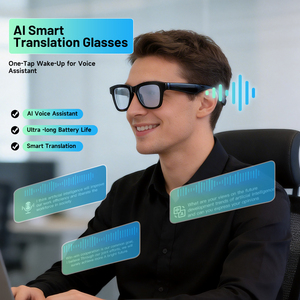
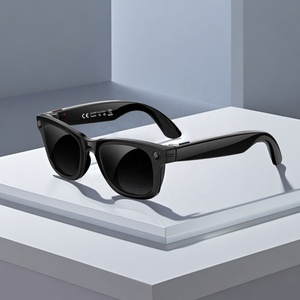
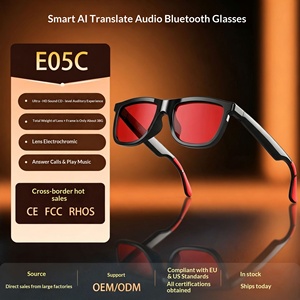
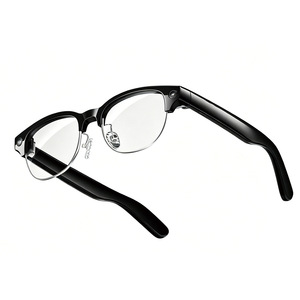
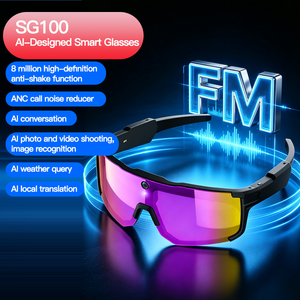
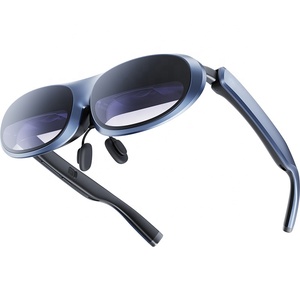
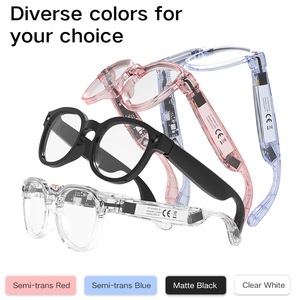

Why leading global optical retailers select our China manufacturing network over generic audio OEMs.
Unlike standard bone-conduction transducers that transmit harsh vibrations to the temporal bone, our proprietary acoustic engineering directs micro-acoustic beams directly into the ear canal. This results in leak-free spatial privacy during confidential business calls.
Protected by 100+ international patents, our quick-release SmartHinge™ system decouples the electronic temples from the front frame. Retailers can swap front rims—from optical prescription frames to photochromic sport sunglasses—with zero wiring hassle.
Powered by multi-modal Large Language Model (LLM) backends, our smart frames offer low-latency real-time translation across 40+ languages. Dedicated mobile SDKs allow enterprise buyers to deploy custom white-label AI workflow tools.
As the consumer market transitions from basic Bluetooth audio frames to AI-native visual smart glasses, wholesale sourcing strategies must adapt. Sourcing managers can no longer treat smart glasses as simple consumer electronics accessories; they must evaluate factories based on optical precision tolerances, thermal dissipation geometry, ESD protection thresholds, and firmware OTA maintenance.
Historically, smart glasses struggled with adoption because electronic manufacturers ignored optical ergonomics. Traditional optical frames require exact Interpupillary Distance (PD) alignment, pantoscopic tilt adjustments, and vertex distance calibration. Leading Chinese smart glasses factories have now bridged this divide by implementing optomechatronic assembly workflows.
By leveraging modular temple structures, opticians can glaze standard progressive, single-vision, anti-blue light, or photochromic lenses into smart frame fronts without disturbing the internal Bluetooth PCBA or battery cells located inside the temple arms. This modular approach drastically reduces stock-keeping unit (SKU) liability for global distributors.
Distributors utilizing SmartHinge™ modular architecture report a 64% reduction in inventory carrying costs. By stocking universal smart electronic temples alongside interchangeable front frame styles (sunglasses, clear optical, electrochromic), vendors can meet diverse consumer preferences without duplicating expensive electronics stock.
Early open-ear audio glasses suffered from severe sound leakage, rendering private conversations audible to nearby bystanders. Modern top-tier factories in Shenzhen utilize reverse sound wave cancelation and directional micro-waveguides.
By positioning speaker ports at precise angles relative to the tragus and emitting anti-phase acoustic waves externally, sound pressure levels drop significantly beyond a 30-centimeter radius from the wearer's ear. This technological breakthrough allows corporate executives to conduct confidential calls in crowded environments without sacrificing ambient spatial awareness.
With the integration of 8MP CMOS sensors, 1080P micro-display engines, and edge AI processing, privacy compliance has become a major hurdle in Western markets. Leading OEMs implement physical LED recording indicators hardwired to the camera sensor power line, rendering software tampering impossible. Furthermore, physical privacy covers and quick-disconnect camera fronts allow users to enter privacy-sensitive environments (such as medical clinics or secure manufacturing facilities) without taking off their prescription eyewear.
Below is an engineering benchmark comparison analyzing the primary OEM platform configurations manufactured in China’s top hardware hubs:
| Architecture Feature | Audio-Only Smart Frames | Vision & Camera AI Frames | Augmented Reality (AR) Frames | Solos® AirGo™ Platform |
|---|---|---|---|---|
| Primary Micro-Chipset | Qualcomm QCC / Bestechnic | Qualcomm Snapdragon AR1 / MediaTek | Rockchip / Sony Micro-OLED Driver | Custom Low-Power Dual Core SoC |
| Weight Range (Grams) | 28g – 36g | 45g – 58g | 70g – 95g | 30g – 42g (Ultra-Light) |
| Acoustic Isolation | Basic Directional | Dual-Mic Beamforming | Standard Stereo Speaker | Whisper® Waveguide (<30cm leak) |
| Optics Versatility | Fixed Rim Only | Camera Front Fixed | Fixed Waveguide Lens | SmartHinge™ Swappable Fronts |
| Ingress Protection | IPX4 | IP54 | Non-rated | IP54 to IP67 Rated |
| AI Ecosystem Support | Siri / Google Voice Passthrough | Cloud-based LLM API | On-device Spatial Vision | SolosChat™ + SDK White-Label |
Integrating high-performance micro-processors into tiny eyewear temples presents severe thermal and physical space challenges. Top-tier manufacturers utilize dual-cell lithium-polymer batteries contoured to the natural curve of the ear stem. By balancing the weight distribution across both ear hooks (e.g., 145mAh per side for a total of 290mAh), wearer fatigue is minimized.
Furthermore, thermal conductivity is managed using ultra-thin graphite heat spreaders that route PCBA thermal energy away from the skin, ensuring temple surface temperatures remain well below the 41°C ISO safety threshold during continuous 1080p video recording or AI voice translation sessions.
Derived from over a decade of high-precision micro-display R&D through MIT and Kopin Corporation engineering lineages, our manufacturing facilities adhere to strict semiconductor and optical assembly protocols.
Optical modules and micro-display prisms are assembled in Class 10,000 dust-free cleanrooms to eliminate microscopic particle contamination.
Every production lot undergoes frequency response, total harmonic distortion (THD), and directional leakage testing in certified acoustic chambers.
We provide comprehensive iOS, Android, and Web SDKs, allowing corporate clients to brand their own AI voice assistants and real-time translation tools.
When executing an OEM/ODM purchase order with a Chinese smart glasses manufacturer, procurement teams must verify the following five critical engineering milestones during DFM (Design for Manufacturing) sign-off:
Essential guidance for optical chains, electronics brands, and B2B importers.
Partner with China’s premier AI glasses manufacturing network. Contact our engineering team for technical datasheets, sample evaluations, and OEM/ODM quotations.