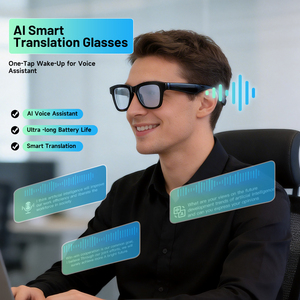
Outdoor Sports
Explore our export-ready smart optical sunglasses, open-ear audio frames, and electrochromic polarized lenses designed for global brands, opticians, and distributors.
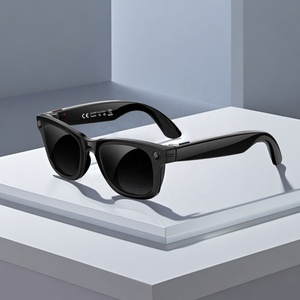
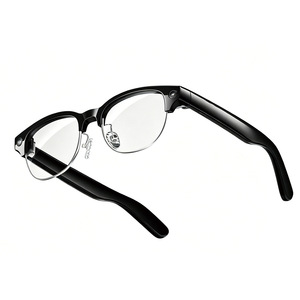
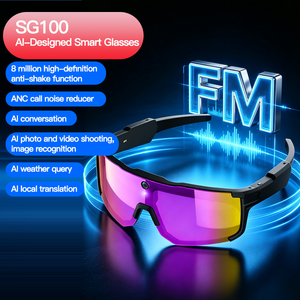
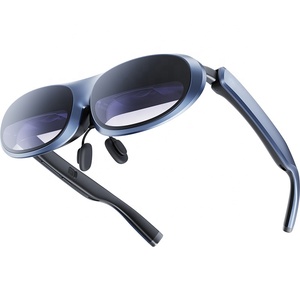
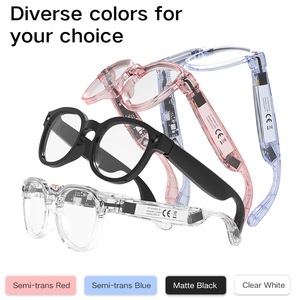
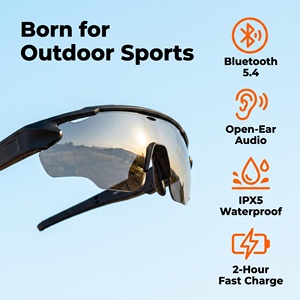
A comprehensive technical brief for B2B optical buyers, product managers, and eyewear distributors evaluating high-performance glare-reduction lens technologies.
The global demand for high-grade polarized lenses has evolved from basic glare reduction in sport sunglasses to complex multi-layer optical assemblies integrated into everyday prescription eyewear, AR micro-displays, and AI-enabled smartglasses. As an industry-leading OEM/ODM factory partner originating from advanced micro-display and optics R&D (with over 100 patents and patent applications), we engineering-design polarized lenses to strictly eliminate horizontal glare while maintaining optimal luminous efficiency, spatial clarity, and structural integrity under ambient stress.
Our tri-acetate cellulose (TAC) and polycarbonate (PC) polarized lenses embed a microscopic Polyvinyl Alcohol (PVA) dichroic iodine film matrix. Positioned precisely in the geometric center of the lens blank, this layer filters 99.9% of horizontally polarized reflected light (from asphalt, water, and snow) while passing 100% of useful vertical light rays.
Engineered to work seamlessly with our proprietary SmartHinge™ frame swappable architecture. B2B procurement partners can pair a single set of smart electronic temples with multiple front frames featuring polarized prescription, blue-light blocking, photochromic, or electrochromic dynamic tint lenses.
Every OEM production batch undergoes rigorous ANSI Z80.3, ISO 12312-1, and EN 1836 drop-ball impact testing. Multi-layer hydrophobic, oleophobic, and vacuum AR coatings protect the polar film against delamination during tropical heat immersion or high-intensity athletic vibration.
Achieving superior glare reduction requires fine-tuning the polar efficiency ratio against visual clarity. Standard sun lenses operate at Category 3 (8%–18% VLT) with a polarization efficiency exceeding 99%. For smart glasses and heads-up micro-display optical waveguides, our OEM lab manufactures custom Category 2 (18%–43% VLT) photochromic polarized matrices that darkens under UV light outdoors while maintaining crystal-clear interior screen legibility.
Selecting the correct optical substrate depends heavily on the end-user application—whether for lightweight fashion frames, high-impact ballistic sports gear, or smart audio/AR eyewear integration. The table below highlights key parameters across our factory's core material offerings:
| Substrate Material | Refractive Index | Abbe Value | Impact Resistance | Delamination Risk | Best OEM/ODM Use Case |
|---|---|---|---|---|---|
| TAC (Tri-Acetate Cellulose) | 1.49 - 1.50 | 58 | Standard | Ultra-Low (Fused Layer) | Casual Sunglasses, Promotional Smart Frames |
| Polycarbonate (PC) | 1.59 | 30 | Extremely High (Ballistic) | Low (Injection Encapsulated) | Sports Smart Glasses, Cycling, Safety Eyewear |
| Polyamide (Nylon) | 1.53 | 52 | High Flexural Strength | Zero (Cast Polarized) | Premium Luxury Sunglasses, Prescription Glazing |
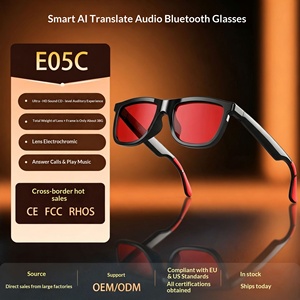
| Electrochromic (EC) Smart Glass | 1.55 - 1.60 | 45+ | High (Tempered Composite) | Zero (Solid-State Cell) | 4-Gear Touch Tint Shift Smart Glasses (E05C Series) |
Navigating technology transitions: How smart sensor integration, dynamic tint shifting, and sustainability are reshaping global OEM/ODM supply chains.
Static dark tinting is giving way to active voltage-controlled electrochromic (EC) liquid crystal polarization. As seen in our E05C four-gear touch color-change smartglasses, users can adjust visible light transmission in under 0.1 seconds via touch temple taps or ambient light sensor triggers.
Optical chains require smartglasses that support direct prescription glazing. Our factory offers precision freeform digital surfacing that fits single-vision, progressive, blue-light blocking, and photochromic polarized Rx lenses onto electronic smart frames without altering temple mechanics.
Lens polarization must co-exist with micro-acoustic speaker resonance. By pairing non-polarizing anti-vibrational frame materials with open-ear Whisper® directional sound technology, smart audio sunglasses keep phone calls clear and private while protecting eyes from solar glare.
Combining optics micro-engineering heritage with strict ISO quality management to deliver robust supply chain solutions for worldwide retail brands.
Unlike standard frame assembly facilities, our optical engineering team originates from specialized micro-display and precision lens design (developed alongside Kopin Corporation innovations). We operate full-stack OEM/ODM manufacturing capabilities under rigorous ISO-controlled conditions, offering end-to-end services from optical ray-tracing simulation and rapid 3D prototyping to automated injection molding, vacuum coating, and prescription laboratory glazing.
In-house CNC mold-making allows customized frame geometries, temple width sizing (S/M to L/XL extended fit), wrap angles (4-base to 8-base sport curves), and proprietary hinge mechanical integration within 3 to 5 weeks.
Every polarized lens batch is certified compliant with FDA Impact Resistance (21 CFR 801.410), CE EN ISO 12312-1:2013, ANSI Z80.3:2018, and Australia AS/NZS 1067. Smart electrical components comply with FCC, CE-RED, IP54 splash proof, and IP67 waterproof standards.
For brands launching smart voice or AI translation wearables (SolosChat™ and SolosTranslate™ integrations), we offer software developer kit (SDK) access, Bluetooth BLE OTA firmware continuity, and app pairing architecture.
Addressing essential technical, manufacturing, and order management questions for commercial optical buyers.
Connect directly with our optical engineering and OEM/ODM manufacturing teams for factory pricing, sample requests, custom mold consultations, and SDK integration support.
Send an Inquiry