AI Audio
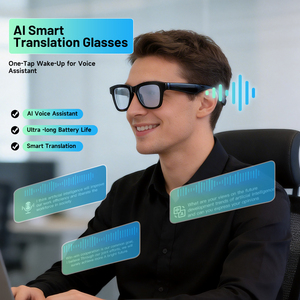
ISO-Compliant OEM/ODM Export Models with Open-Ear Audio, AI Translation & Photochromic Optics
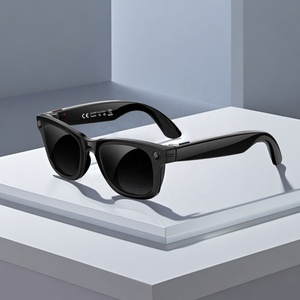
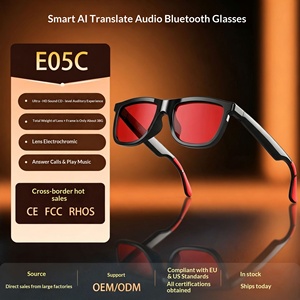
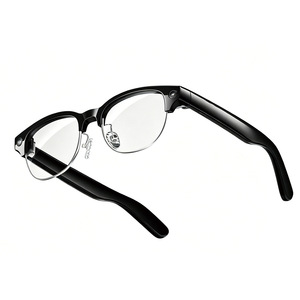
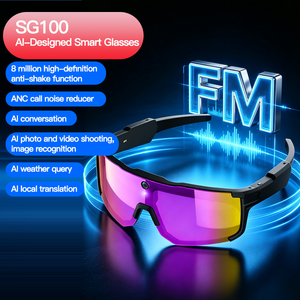
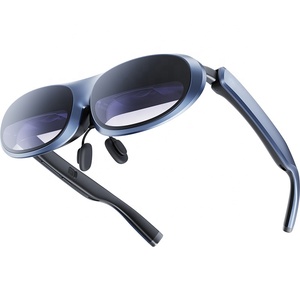
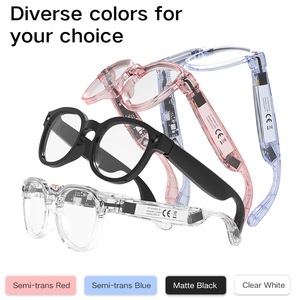
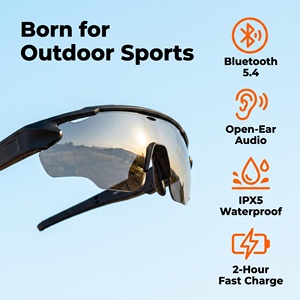
Analyzing Technological Convergence, Acoustic Innovations, and OEM/ODM Manufacturing Capabilities
The global wearable technology ecosystem is undergoing a fundamental structural transition. Traditional sun protection eyewear and standalone Bluetooth headsets are converging into a unified product category: AI-Enabled Open-Ear Wireless Smart Sunglasses. As global consumer demand pivots toward hands-free situational awareness, real-time voice translation, and seamlessly integrated vision enhancement, China has established itself as the world's premier research, design, and manufacturing hub for advanced smart optics.
For international procurement managers, brand owners, and optical retail chains, navigating the Chinese manufacturer ecosystem requires evaluating technical benchmarks far beyond standard frame injection. Modern B2B procurement demands a rigorous analysis of acoustic dipole cancellation efficiency, micro-display system integration, electrochromic lens response latency, and modular temple architecture. As leading China wireless sunglasses manufacturers & exporters, Tier-1 factories have evolved from low-cost original equipment assemblers into full-stack intellectual property co-developers operating under ISO 9001, ISO 13485 (Medical Optical Devices), and BSCI social compliance frameworks.
This industry whitepaper provides an authoritative guide for international enterprise buyers seeking high-gain procurement strategies. It covers structural market dynamics, future technological roadmaps, OEM evaluation protocols, and practical solutions for integrating prescription-ready optical fronts with cutting-edge micro-acoustics and Artificial Intelligence edge chips.
Strategic Shifts Driving International B2B Sourcing Decisions
Monolithic frame designs are rapidly being phased out. Enterprise buyers are shifting procurement toward modular quick-release hinge systems. By separating the electronic acoustic temples from front optical frames, distributors reduce stock-keeping unit (SKU) complexity by up to 60%, allowing end-users to swap between optical clear glasses, polarized sunglasses, and sport wrap frames instantly.
Wireless audio sunglasses are no longer limited to basic media streaming and call handling. Sourcing specifications now emphasize low-power dual-microphone arrays paired with Neural Network Noise Suppression (NNNS). On-board Bluetooth microcontrollers directly interface with cloud translation engines (supporting 40+ languages) and conversational AI assistants.
While traditional photochromic (transitions) lenses remain popular, procurement contracts for high-end sport and tactical sunglasses are adopting micro-touch electrochromic tint switching. Utilizing flexible liquid crystal films, tint levels can adjust across 4 distinct light transmittance states in under 0.1 seconds via temple touch controls.
Engineering Insights for B2B Quality Assurance & Specification Standards
A primary decision factor in OEM smart sunglasses procurement is selecting the appropriate acoustic transmission architecture. Historical bone-conduction transducers suffered from harsh facial vibrations, muddy mid-range frequencies, and poor wear comfort. Modern Chinese engineering facilities have pioneered Directional Open-Ear Acoustic Cavities utilizing acoustic reverse-phase cancellation technology.
| Performance Parameter | Directional Open-Ear Acoustic (Solos Whisper® Class) | Traditional Bone Conduction Transducers | Standard Mini Speaker Cavity |
|---|---|---|---|
| Sound Leakage Suppression | High (-30dB Dipole Cancellation) | Moderate (-12dB Structural Leak) | Poor (-5dB Ambient Dispersion) |
| Frequency Response Range | 20Hz – 20kHz (Balanced Hi-Fi Audio) | 300Hz – 8kHz (Narrow Vocal Range) | 100Hz – 15kHz (Uneven Frequency Curve) |
| Wearing Comfort & Ergonomics | Zero Pressure on Temporal Bone | High Clamping Force Required | Standard Frame Fit |
| Ingress Protection Potential | IP54 / IP67 Sealed Membranes | IP65 Transducer Housing | IPX4 Basic Splash Resistance |
| Battery Efficiency (Continuous Playback) | Up to 10 Hours (220mAh - 290mAh) | Approx. 6 Hours (High Power Draw) | Approx. 7 Hours |
By specifying directional audio cavities, B2B buyers deliver an open-ear listening experience that leaves the ear canal unobstructed—ensuring situational safety during cycling, running, or outdoor work while retaining complete call privacy in quiet office environments.
Leveraging Optics Heritage, Patent Protection, and Global Supply Chain Scalability
The technical foundation of premier Chinese smart eyewear manufacturers traces back to advanced optical and micro-display engineering developed through deep research partnerships, including legacies built upon Kopin Corporation optics innovations and MIT-trained engineering leadership. When sourcing wireless smart sunglasses from China, enterprise importers gain direct access to an established technological moat:
Leading export facilities maintain over 100 patents and international patent applications covering quick-swap SmartHinge mechanism geometries, directional acoustic waveguides, touch sensor integration, and anti-leakage speaker orientation. This IP foundation protects global distributors from patent infringement actions in North American and European retail markets.
Unlike consumer gadget assembly lines, qualified smart sunglasses factories operate under strict optical dispensary standards. Every frame front—whether clear, photochromic, TAC polarized, or blue-light blocking—is designed to accommodate custom optical glazing (single vision, progressive, or clip-on prescription carriers) without compromising electronics integrity.
Beyond hardware, top exporters provide specialized iOS and Android companion app white-labeling. Enterprise clients benefit from customizable BLE telemetry, head-gesture motion tracking algorithms, voice command routing, and direct integration with custom enterprise software platforms.
Export units undergo exhaustive reliability testing: 10,000-cycle hinge endurance stress tests, IPX4-IPX7 water immersion checks, UV400 lens spectrum validation, -20°C to 60°C thermal shock cycling, and acoustic Anechoic chamber calibration to ensure flawless out-of-box performance.
Standard Operating Procedures for Technical Verification and Contract Execution
Request golden samples for lab testing. Verify optical clarity utilizing spectrophotometers to confirm 100% UVA/UVB protection and zero prismatic distortion. Evaluate sound pressure levels (SPL) and acoustic leak cancellation at 30cm distances in an Anechoic chamber environment.
Ensure manufacturer documentation includes valid CE (EMC/LVD), FCC ID certification for Bluetooth radiation, RoHS directive compliance for hazardous substances, REACH chemical testing for frame materials (TR90 / Swiss Grilamid / Acetate), and FDA medical device registration for optical frames.
Inspect lithium-ion polymer battery safety certificates (UN38.3, MSDS, IEC 62133). Confirm the inclusion of dual-NTC thermal cut-off circuitry inside the temples to prevent heat dissipation near the user's head during prolonged fast charging.
Define custom branding parameters: laser-engraved logos on temples, customized Bluetooth pairing IDs, voice prompt language localization, eco-friendly retail packaging, and magnetic charging cable accessories.
Practical Answers for Sourcing Officers, Optical Chains, and Electronics Wholesalers
For standard factory-ready models with custom logo laser engraving and branded packaging, MOQ typically starts at 200 to 500 units per style. For full ODM projects requiring custom injection molds, specialized frame geometries, or unique PCB layouts, MOQ generally ranges from 1,000 to 3,000 units.
All export frame series are engineered with standardized bevel grooves. Opticians can glaze single vision, progressive, photochromic, or blue-light blocking prescription lenses using standard optical edging machinery. Additionally, select sport models support snap-in inner Rx carriers, allowing users to switch tinted outer lenses without altering their prescription setup.
Our products hold comprehensive global certifications including CE, FCC ID, RoHS, TELEC, and SRRC. For camera-equipped vision smart glasses, frames feature an active hardware LED recording indicator. Furthermore, SmartHinge™ modular temples allow users to swap out camera frame fronts for camera-free fronts when entering restricted or high-privacy environments.
Our audio smart sunglasses utilize high-density 210mAh to 290mAh lithium-polymer batteries, delivering up to 10 hours of continuous music streaming or 7 hours of voice calls on a single charge. Charging is facilitated via magnetic quick-connect cables or standardized USB-C ports, achieving an 80% charge in under 30 minutes with over-voltage and thermal protection.
Yes. We offer robust Software Development Kit (SDK) documentation and API endpoints. Enterprise clients can connect the smart sunglasses to proprietary cloud services, specialized translation databases, or enterprise voice-workflow platforms (such as warehouse picking systems or real-time tour guide translation applications).
All enterprise orders come with a standard 12-month manufacturer warranty. We provide 1% to 2% spare unit allocations or modular replacement components (such as standalone electronic temples, battery kits, and optical fronts) with bulk shipments, backed by technical firmware support and dedicated account management.
Elevate your eyewear brand or retail line with industry-leading open-ear audio, modular SmartHinge™ mechanics, and advanced AI translation capabilities. Contact our engineering and OEM sales team today for factory pricing, sample requests, and technical specifications.