China Micro Display & Smart Optics Manufacturing Ecosystem
An authoritative technical analysis for procurement directors, hardware engineers, and consumer electronics brand leaders.
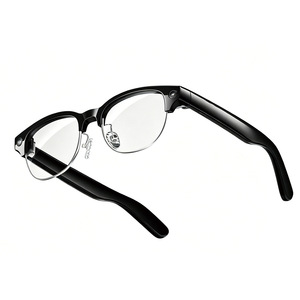
The global wearable technology landscape is undergoing a paradigm shift from traditional smartphone-tethered audio accessories to autonomous, spatial-aware AI Smart Eyewear and Augmented Reality (AR) Near-Eye Systems. At the epicenter of this technological revolution is China's micro display manufacturing ecosystem. Concentrated heavily in tech hubs such as Shenzhen, Dongguan, Suzhou, and Hefei, Chinese factories and optical suppliers have transitioned from basic OEM assembly to pioneering state-of-the-art MicroOLED (OLED-on-Silicon), MicroLED, and Diffractive Optical Waveguide engines.
Building high-yield near-eye display modules requires ultra-precise semiconductor lithography backplanes combined with optical lens glazing, micro-acoustic wave-guides, and low-power silicon chipsets. As a lead manufacturer rooted in MIT-trained optics engineering heritage and backed by over 100 technological patents, our facility bridges the gap between raw silicon micro-displays and finished consumer-ready smart eyewear. By standardizing ISO-controlled production workflows, custom optics bonding, and modular mechanical frameworks, Chinese manufacturing partners deliver unparalleled cost-efficiencies without compromising micro-display luminance, pixel density, or long-term structural reliability.
Micro Display Technology Comparison: MicroOLED vs. MicroLED vs. LCoS
When selecting a micro display factory or supplier in China, hardware engineering teams must evaluate display modalities against target application constraints—such as indoor office productivity, daylight outdoor sports visibility, battery endurance, and thermal dissipation.
| Optical Parameter |
MicroOLED (OLED-on-Silicon) |
MicroLED (GaN on Silicon) |
LCoS (Liquid Crystal on Silicon) |
Fast-LCD Near Eye |
| Peak Luminance (Nits) |
1,500 – 5,000 Nits |
100,000 – 3,000,000 Nits |
10,000 – 30,000 Nits |
500 – 1,200 Nits |
| Contrast Ratio |
100,000:1 (True Black) |
100,000:1 (True Black) |
1,000:1 |
1,500:1 |
| Pixel Density (PPI) |
3,000 – 4,000+ PPI |
5,000 – 10,000+ PPI |
2,500 – 3,500 PPI |
800 – 1,200 PPI |
| Power Efficiency |
High (Self-emissive) |
Ultra-High (Superior lm/W) |
Moderate (External Light Source) |
Low to Moderate |
| Primary Application |
Cinematic AR Glasses / VR HMDs |
Outdoor HUD / Monocular AR |
Enterprise Smart Helmets |
Entry-level VR Headsets |
| China Supply Chain Yield Rate |
Mature (>85% Commercial Yield) |
Emerging (>60% Mass Production) |
Mature (>90%) |
Very High (>95%) |
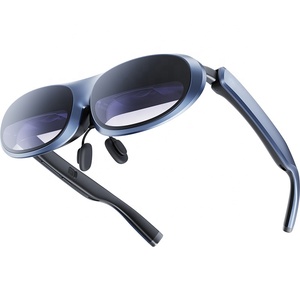
While MicroOLED displays currently dominate immersive virtual giant-screen visual headsets (such as dual 1080p gaming glasses), MicroLED modules coupled with optical waveguides represent the ultimate frontier for lightweight daylight-readable smart glasses. Chinese supply chain partners lead the world in scaling 0.13-inch MicroLED micro display engines that weigh under 1.5 grams per optical module.
Micro Display Sourcing & Technology Trends (2026 – 2030)
Strategic foresight for global hardware buyers navigating China's evolving optoelectronics landscape.
As micro display manufacturing scales globally, international procurement teams must align their product roadmaps with five critical technology trends dominating Chinese factory R&D pipelines:
1. MicroLED Wafer-Level Hybrid Bonding
The transition from monolithic MicroOLED to silicon-backplane MicroLED micro displays is accelerating. By utilizing advanced flip-chip transfer and RGB quantum dot color conversion, Chinese micro display foundries are achieving brightness levels exceeding 1,000,000 Nits. This milestone guarantees full sunlight readability for outdoor sports glasses and industrial augmented reality headsets without thermal throttling.
2. Integrated Electrochromic Light Engine Control
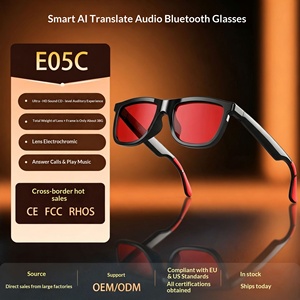
One major bottleneck of optical waveguides is light attenuation under ambient sunlight. Next-generation factories are embedding electronic touch color-change dynamic lenses (such as featured in our E05C series). By automatically or manually altering lens tint across 4 distinct levels (from clear 85% light transmission to 10% dark sunglasses), micro display visibility remains razor-sharp regardless of environmental glare.
3. Multi-Modal Vision AI & Spatial Context Sensing
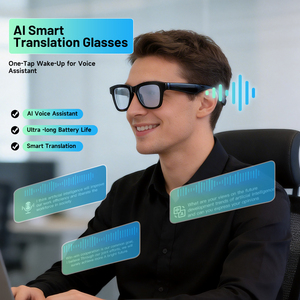
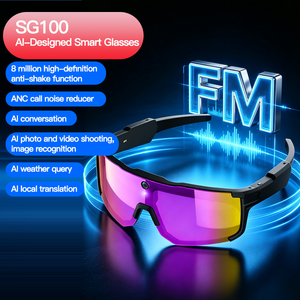
Micro displays are no longer passive presentation screens. In 2026 and beyond, smart glasses combine ultra-compact micro displays with 8MP video capture and lightweight Edge-AI chipsets. These glasses interpret the user's visual field in real-time—offering live contextual translation, object recognition, and hands-free tele-prompter overlay for maintenance engineers and medical practitioners.
4. Modular Frame Architecture (SmartHinge™ Ecosystems)
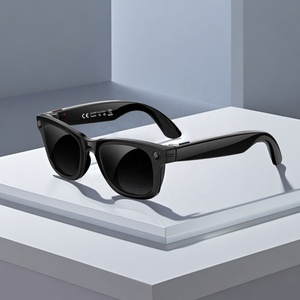
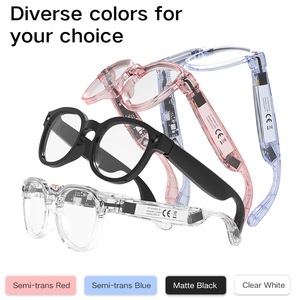
To reduce SKU complexity for optical chains, buyers are demanding modular smart frames. Instead of stocking hundreds of individual smart glasses variants, distributors utilize a single master electronic temple pair compliant with multiple front frame designs (wayfarer, round, aviator, sport shield, or rimless prescription). This modularity cuts inventory carrying costs by up to 60%.
5. Open SDK & Cross-Platform Software Interoperability
B2B enterprises require seamless integration into Android, iOS, and enterprise spatial computing suites. Future-proof micro display suppliers in China now bundle open Bluetooth/Wi-Fi SDKs, enabling custom voice command mapping, gesture-control touch sensor integration, and enterprise data security protocols.