
Explore enterprise-grade smart eyewear designed by China's leading optics and acoustics OEM/ODM manufacturers. Prescription-ready, Bluetooth-enabled, and optimized for global export.
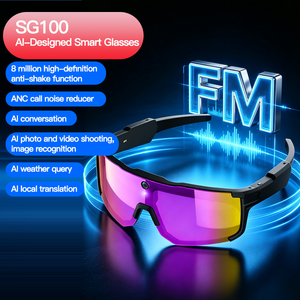
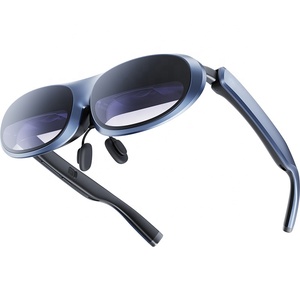
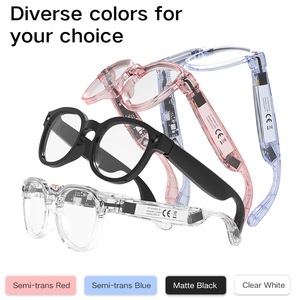
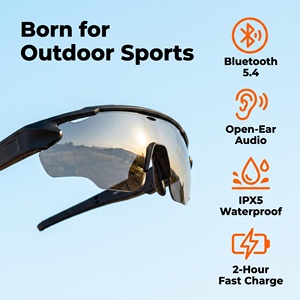
Why top global eyewear distributors, optical chains, and technology OEMs partner with China's elite audio glasses engineering hubs.
Utilizes reversed phase acoustics to direct sound waves strictly into the ear canal while suppressing ambient sound leakage by over 85%, ensuring caller privacy during business conversations.
Patented quick-release hinge architecture allows buyers to detach electronic temples and swap front frame styles—from sport sunglasses to classic optical prescription frames—in under 3 seconds.
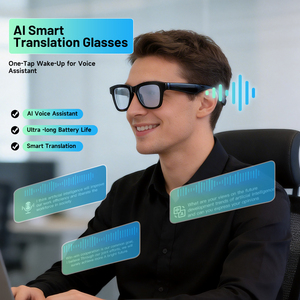
Deep software integration with Cloud LLMs enables real-time 1-on-1 translation in 40+ languages, smart voice transcription, and hands-free voice assistance for field workers and global travelers.
Engineered optical temple grooves accept full optical prescriptions (Single Vision, Progressive, Photochromic, and Anti-Blue Light) without straining the underlying electronics or structural integrity.
Operating out of high-precision manufacturing facilities in Shenzhen and Dongguan, adhering strictly to ISO9001, BSCI, CE, FCC, RoHS, and REACH international trade compliance standards.
Custom power management ICs combined with dual 110mAh-290mAh polymer lithium batteries deliver up to 10 hours of active audio playback and 7 hours of high-definition voice calls.
The global smart wearable market has experienced a radical paradigm shift over the past three years. Traditional hearables—such as In-Ear True Wireless Stereo (TWS) earbuds—are increasingly giving way to open-ear smart eyewear. As consumers demand longer wearability, enhanced situational awareness, and seamless interaction with Artificial Intelligence, Chinese smart audio glasses factories have positioned themselves at the epicenter of this technological revolution.
Historically recognized for high-volume spectacle frame manufacturing in regions such as Danyang (Jiangsu), Shenzhen (Guangdong), and Wenzhou (Zhejiang), Chinese manufacturers have successfully synthesized traditional optical craftsmanship with cutting-edge micro-acoustics, chip-on-board (COB) packaging, and wearable AI integration. Today, sourcing managers and OEM/ODM buyers looking for China's best audio glasses factories and exporters are no longer merely procuring plastic frames with miniature speakers; they are contracting sophisticated hardware-software ecosystems built upon deep intellectual property portfolios, ISO-certified quality assurance, and modular optical platforms.
Rooted in optical engineering lineages pioneered by optics pioneers (such as engineering teams originating from Kopin Corporation and MIT laboratories), top-tier Chinese manufacturers now hold over 100 patents across acoustic beamforming, micro-hinge mechanics, low-latency Bluetooth transmission, and electrochromic lens controls. This whitepaper provides international procurement directors, consumer electronics brand managers, and retail optical chains with an authoritative analysis of technology trends, supply chain dynamics, factory evaluation protocols, and future procurement strategies.
To make informed procurement decisions, global importers must understand the technical pillars that distinguish market-leading smart glasses manufacturers from low-tier assemblers.
Early iterations of smart glasses relied heavily on bone conduction transducers. While bone conduction maintains open ears, it suffers from severe drawbacks: high mechanical vibration against the temporal bone, poor bass response, high power consumption, and notable sound leakage in quiet environments.
China's premier factories have systematically migrated to Directional Open-Ear Micro-Acoustics (e.g., Whisper® acoustic technology). This engineering approach places ultra-miniature dynamic drivers inside the spectacle temples, precise-aligned with dual acoustic ports pointing directly toward the wearer's ear canal. By leveraging phase-inversion sound wave cancellation (where an secondary acoustic port emits an inverted sound wave 180 degrees out of phase), sound leakage into the surrounding ambient space is reduced by 80% to 90%.
A major pain point in traditional smart eyewear supply chains has been inventory SKU inflation. Offering 5 frame styles across 3 colors with 4 lens variations meant stocking dozens of complex electronic SKUs.
Leading exporters have solved this via modular hardware architectures such as SmartHinge™. Under this system, all electronic components (Bluetooth SoC, batteries, touch sensors, microphones, and speakers) are concentrated within the detachable left and right temple arms. The front frame (the optical chassis) contains no electronic wiring and connects via a standardized, IP54-sealed multi-pin connector. This allows global brand buyers to order standardized electronic temples in bulk while offering an extensive catalog of front frames—ranging from polarized sport sunglasses to ultra-light titanium eyeglasses—without expanding electronic inventory liability.
| Architecture Feature | Legacy Smart Glasses (2020-2023) | Next-Gen China Factory Standard (2026+) | Procurement Advantage |
|---|---|---|---|
| Audio Transducer | Standard Bone Conduction / Open Speaker | Directional Dual-Port Acoustic + Phase Cancellation | Zero temporal vibration, private call security |
| Hardware Design | Monolithic / Fixed Frame Assembly | Modular SmartHinge™ Quick-Release Fronts | 90% reduction in electronic SKU holding costs |
| Lens Compatibility | Flat Plano Tinted Lenses Only | Rx Prescriptions (-8.00D to +6.00D), Electrochromic | Direct entry into professional optometry retail |
| Voice & AI Integration | Basic Siri/Google Voice Passthrough | On-board AI translation engine (40+ Langs), SolosChat™ | High value-add software subscription monetization |
| Ingress Protection | Unrated / IPX2 Sweat Resistant | IP54 to IP67 Certified Water/Dust Sealed | Suitable for intense outdoor sports & cycling |
The integration of AI algorithms directly into wearable hardware marks the defining trend of 2026. Top Chinese manufacturers do not simply export hardware; they offer turn-key SDK and Software Partner Programs. By pairing smart glasses with proprietary smartphone applications (such as SolosTranslate™ and SolosChat™), wearers can experience low-latency bi-directional voice translation during face-to-face cross-border meetings, multi-party conference calls, or international travel.
As a procurement manager or OEM buyer, forecasting market shifts is critical for inventory risk management and gross margin optimization. Over the next five years, four macro-trends will dominate the smart audio glasses procurement landscape:
Historically sold alongside consumer electronics in gadgets stores, audio glasses are rapidly shifting into optical retail chains (e.g., optician shops and optometrist dispensaries). Over 60% of adults globally require vision correction. Factories that produce frames engineered specifically for glazing with single-vision, progressive, anti-blue light, or photochromic prescription lenses will capture the vast majority of market share. Importers must prioritize suppliers whose frame bevels and temple angles comply with standard optical edging machinery (e.g., Essilor/Nidek edgers).
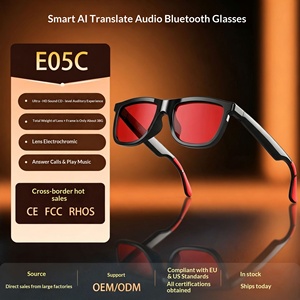
Manual lens swapping is becoming obsolete. The introduction of 4-gear touch-controlled electrochromic lenses (as featured in the E05C series) allows users to alter lens transparency from Tint Level 1 (clear indoor) to Tint Level 4 (dark sun outdoor) within 0.1 seconds via a quick temple slide. Exporters equipped with clean-room coating facilities for liquid-crystal or electrochromic film lamination represent the high-tier spectrum of Chinese manufacturing capability.
With models incorporating 8MP photo capture and 1080P/30fps video recording (such as the H03B and Prime 2 series), audio glasses are evolving into lightweight spatial content creation devices. However, global privacy regulations (e.g., GDPR in Europe, state-level consent laws in the US) require hardware-enforced privacy indicators. Premier Chinese factories are installing physical LED recording lights wired directly to the camera sensor circuit—preventing software bypass—and offering quick-swap non-camera fronts for privacy-sensitive environments.
Global ESG mandates are forcing brands to source eco-friendly products. Top Chinese exporters are adopting bio-based Swiss TR90 memory nylon, recycled acetate, and nickel-free hypoallergenic titanium alloys. Coupled with ultra-efficient 290mAh fast-charging batteries delivering 10+ hours of continuous operational life, these eco-conscious designs meet the strict standards required by European and North American enterprise buyers.
Selecting the right manufacturing partner in China requires a systematic audit methodology. Given the technical complexity of combining micro-electronics with precision eyewear, buyers should evaluate potential factories across five key audit dimensions:
Below are technical and commercial answers to the questions most frequently posed by international procurement officers during factory negotiations:
Ready to launch your brand's next-generation smart eyewear lineup? Connect directly with our Senior OEM/ODM Engineering Team for instant catalog access, factory audit reports, wholesale pricing, and sample requests.