Free tracked shipping over US$199 in North America · solos AirGo™ V2 with photochromic lens now shipping

0%

Camera smartglasses are attracting attention because they make photo and video capture feel almost immediate. A wearer can record a short clip while walking, keep both hands free, and continue looking at the scene. That convenience is compelling. It is also not the whole story: buyers weigh comfort, battery life, privacy, and whether the camera is useful beyond occasional moments.

Market figures suggest growing interest, but they need careful interpretation. Grand View Research estimated the global smart glasses market at about $1.93 billion in 2023 and projected it could reach $6.89 billion by 2030, a forecast compound annual growth rate of 20%. The report covers smart glasses broadly, not camera models alone. So the forecast signals category momentum, rather than a precise measure of Camera smartglasses demand. That distinction matters.

Demand is also shaped by familiar, practical details. A lightweight frame, clear audio, simple controls, and a case that fits in a pocket can make daily use easier. Camera features add value when they capture a brief family moment, a cooking step, or a view that would be awkward to film with a phone. Still, convenience has limits. People may hesitate when recording indicators are unclear, or when images are difficult to review and share. The market is promising, but not settled. For brands, lasting growth will depend on reliable performance, transparent design, and a clear reason to wear the glasses instead of reaching for a phone.
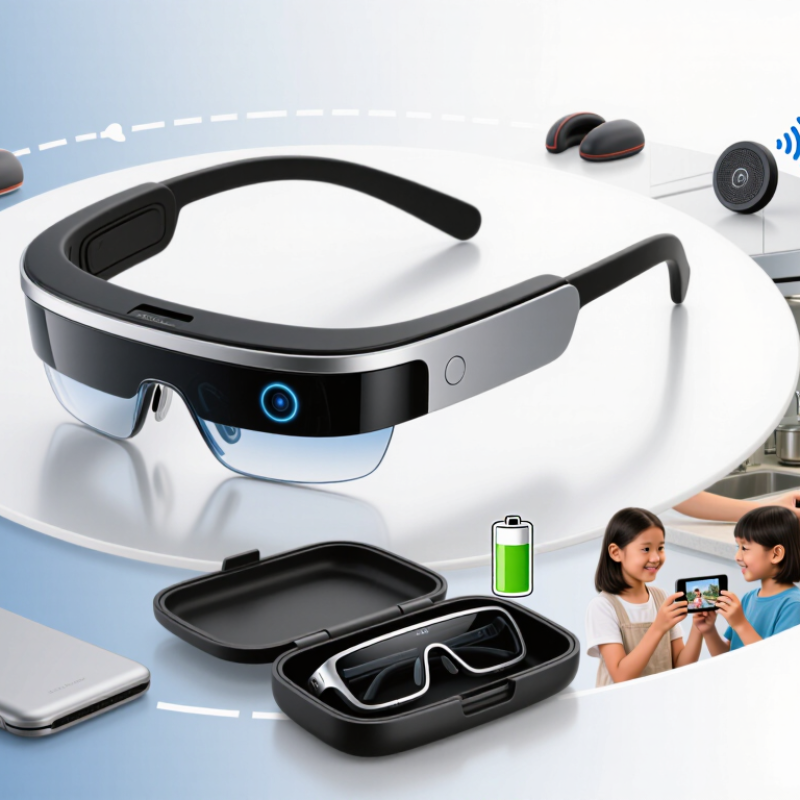
Why Are Camera Smartglasses in High Demand?

What Camera Smartglasses Are and How They Work

Why Are Camera Smartglasses in High Demand?

What Camera Smartglasses Are and How They Work

Camera smartglasses are eyewear with a small camera, microphone, processor, and wireless connection built into the frame. They can capture photos or short videos from the wearer’s viewpoint, then save files locally or transfer them to a paired phone. Some models also support voice commands, audio playback, or simple on-device assistance. The camera is usually near the hinge or upper frame, so its angle can differ from what the wearer notices.

The process is straightforward. A button or voice command activates the camera; the processor handles the image, while storage or a connected phone keeps the file. Grand View Research valued the global smart glasses market at $1.93 billion in 2023 and projected 27.3% annual growth from 2024 to 2030. IDC reported 534.6 million wearable-device shipments worldwide in 2024, covering a much broader category than camera glasses. These figures suggest momentum, but they do not prove every buyer wants a camera.

The appeal is hands-free capture: a cyclist can record a route, or a cook can document a technique without reaching for a phone. Small details matter. Battery life, image quality, and camera placement can disappoint in real use. A visible recording light may help others understand when capture is active, yet it cannot explain the full context. The convenience is real; so is the awkwardness.

How Hands-Free Capture Fits Everyday Activities

Hands-free capture fits moments when reaching for a phone interrupts the task. A home cook can record a quick step while stirring, then keep both hands on the pan. On a walk, a short voice command may capture a child’s funny remark before it disappears. The appeal is not simply better footage. It is less friction between noticing something and saving it.

The habit has a large digital backdrop. Pew Research Center’s 2024 Mobile Fact Sheet reports that 91% of U.S. adults own a smartphone. DataReportal’s Digital 2024 Global Overview Report estimates that internet users spend an average of 2 hours and 23 minutes on social media daily. These figures do not prove demand for camera smartglasses. They do show how routine mobile access and sharing have become. Smartglasses offer another way to capture and share, especially when hands are busy.

Still, hands-free does not mean attention-free. A camera can distract during a crowded walk, and nearby people may not realize they are being recorded. Ask before filming others, and pause capture when safety or privacy matters. Small controls matter: a clear recording light, reliable voice prompts, and easy deletion. The experience can feel awkward, too. Voice commands may fail in a noisy kitchen, and glasses can be uncomfortable after an hour. Those details shape everyday usefulness more than a polished product demo.

Why Are Camera Smartglasses in High Demand?

How hands-free capture fits everyday activities

Hands-free capture is especially useful when an activity already occupies both hands. Bars count hands in use for the specific scenarios shown; this is a task-based illustration, not a consumer survey or market-demand statistic.

Why Convenience and Connectivity Drive Demand

Camera smartglasses appeal because they shorten the gap between noticing a moment and recording it. Someone can capture a child’s first bike ride, a cooking demonstration, or a street sign while keeping both hands free. That small convenience matters during busy, ordinary routines. No phone to reach for.

Connectivity adds another layer. Many models can send photos or short clips to a paired phone, where users can review, edit, and share them. Voice controls may help when hands are occupied, while open-ear audio can provide directions or calls. The experience feels immediate. It is not always seamless, though: pairing delays, battery limits, and accidental recordings can interrupt the flow.

Demand also reflects a preference for tools that fit existing habits. People already carry phones, but glasses can make quick capture feel more natural. In practice, comfort and camera placement matter as much as resolution; frames that pinch after an hour may end up in a drawer. Privacy deserves equal attention. A visible recording indicator, clear consent, and awareness of nearby people help keep everyday use respectful. These details are easy to overlook when a device is new.

Where Camera Smartglasses Are Being Adopted

Camera smartglasses are finding practical roles where workers need both hands free. In warehouses, a technician can record a damaged package while scanning its label. Field-service teams can capture equipment faults and share a first-person view with remote specialists. In healthcare training, recorded procedures may support review, subject to patient consent and secure handling. These are useful, specific tasks—not a case for wearing cameras everywhere.

Adoption is strongest in enterprise settings, including logistics, manufacturing, and on-site maintenance. Grand View Research valued the global smart-glasses market at about $1.93 billion in 2023 and projected a 31.5% compound annual growth rate from 2024 to 2030. That forecast signals commercial momentum, but it does not prove every sector is adopting camera models at the same pace. The picture is uneven. Battery life, comfort during long shifts, and clear workplace recording policies still affect deployment. A camera that saves a worker a few steps may help; one that creates privacy concerns can slow adoption. Deloitte’s 2024 manufacturing outlook also found that 39% of surveyed manufacturers planned to increase smart-manufacturing investment. That broader investment may create room for hands-free visual tools, though it is not a direct measure of smartglasses purchases. Industry forecasts can point the way, but real-world fit still needs testing.

Why Are Camera Smartglasses in High Demand? — Where Camera Smartglasses Are Being Adopted

Adoption area How camera smartglasses are used Why they are attractive Adoption pattern Key consideration
Field service and maintenance Workers share a hands-free, first-person view with remote experts during inspections, repairs, or troubleshooting. Experts can guide work remotely, while workers keep their hands available for tools and equipment. Used in targeted workflows where remote guidance can reduce travel or speed up problem resolution. Reliable connectivity, camera positioning, and safe operation around machinery are important.
Warehousing and logistics Workers can capture task evidence, consult visual instructions, or document procedures without holding a camera. Hands-free capture can fit workflows that already require scanning, handling, or moving goods. Adoption is generally task-specific, with suitability depending on workflow design and device comfort. Battery life, fit, durability, and clear rules for recording in shared workplaces matter.
Manufacturing and quality assurance Teams document inspections, record process steps, and provide remote visual support on production tasks. A first-person view can show details from the worker’s perspective and support consistent documentation. Often evaluated for specific inspection, training, and maintenance processes rather than every production task. Workplace policies must address recording, worker privacy, and protection of sensitive processes.
Training and skills development Instructors record demonstrations from a first-person perspective or coach learners during practical tasks. Learners can review what the instructor saw and did, while instructors can observe work remotely. Suitable for practical training where seeing hand movements and task sequence is useful. Recorded material should be reviewed for accuracy, consent, and appropriate retention.
Healthcare and clinical education Potential uses include training demonstrations, remote consultation, and recording procedures where permitted. Hands-free, first-person video can help convey how a task is performed in a clinical setting. Use is constrained and typically requires careful review of the intended workflow and local rules. Patient consent, confidentiality, infection control, and applicable privacy requirements are essential.
Accessibility and everyday assistance A wearer may use a camera-equipped wearable to share a view with a trusted helper or compatible assistance service. A hands-free point of view can support help with visual tasks while the wearer remains mobile. Use depends on accessibility needs, available services, and the wearer’s preferences. Users should control when sharing occurs and understand who can access the video.
Consumer photography and social sharing Wearers capture short photos or videos from their own point of view during daily activities. The wearable format makes spontaneous, hands-free capture possible without taking out a phone. A consumer use case shaped by convenience, comfort, camera quality, and sharing features. Visible recording indicators and respect for bystanders’ privacy help build trust.

Adoption varies by task and setting; camera smartglasses are most compelling when hands-free, first-person capture solves a clear practical need.

How Privacy and Design Shape Their Appeal

Camera smartglasses appeal because they can capture a moment without a phone in hand. But convenience alone does not earn trust. A tiny camera near the eye can feel intrusive when its status is unclear. A visible recording light, simple controls, and easy-to-find privacy settings give wearers and bystanders useful signals. Small details matter. Pew Research Center’s 2019 survey found that 81% of U.S. adults felt the risks of companies collecting personal data outweighed the benefits. The survey was not about smartglasses, but it shows why discreet recording needs careful design. A light that is hard to notice may look sleek, yet it can make people uneasy.

Comfort shapes acceptance, too. Lightweight frames, balanced weight, and lenses that suit everyday outfits help the device feel like eyewear, not equipment. Grand View Research estimated the wider smart-glasses market at $1.93 billion in 2023 and projected a 27.3% compound annual growth rate through 2030. That forecast signals commercial momentum, not proof that every camera feature will be welcomed. Style can invite use; transparent controls help sustain it. The tension remains. Manufacturers still have to make cameras unobtrusive without making recording ambiguous—a design trade-off that is easy to underestimate.

FAQS

What are camera smartglasses?

They are glasses with a small camera, microphone, processor, and wireless connection built into the frame.

How do camera smartglasses capture photos or videos?

A button or voice command starts the camera. The glasses process the image, then save it locally or send it to a paired phone.

What are camera smartglasses useful for?

They can record a cycling route or a cooking technique while your hands stay free. That can be handy.

Can the glasses connect to a phone?

Many models can transfer photos and short clips to a paired phone. Users can review, edit, or share them there.

Do camera smartglasses always record what the wearer sees?

Not exactly. The camera may sit near a hinge or upper frame, so its angle can differ from the wearer’s view.

What privacy details should users consider?

Check for a visible recording light and clear controls. Tell nearby people when appropriate; a tiny camera can feel intrusive.

What affects comfort during everyday use?

Frame weight, balance, and fit matter. Frames that pinch after an hour may end up in a drawer.

Why are camera smartglasses attracting interest?

Hands-free capture feels immediate, and phone connectivity adds convenience. Still, pairing delays and battery limits can interrupt the experience.

What do market figures say about demand?

One 2023 estimate valued the wider smart-glasses market at $1.93 billion. Growth forecasts suggest momentum, not guaranteed demand for every feature.

Conclusion

Camera smartglasses combine a small camera with eyewear, allowing users to capture photos or short videos while keeping their hands free. They typically connect to a phone or another device so people can review, organize, or share what they record. This simple, wearable approach makes capturing everyday moments less disruptive than reaching for a separate camera.

Their appeal comes from convenience and connectivity, especially during activities such as walking, traveling, cooking, or spending time with friends. Camera smartglasses are also finding uses in work, learning, and outdoor recreation, where hands-free recording can be helpful. At the same time, comfort, appearance, and battery life influence whether people choose to wear them regularly. Privacy matters too: clear indicators, considerate use, and respect for others can help make recording feel more transparent. Ultimately, demand reflects a balance between useful features, natural design, and confidence in how captured moments are handled.

Amelia

Amelia

Amelia is a professional marketing specialist dedicated to helping businesses understand products, markets, and customer needs through clear, practical, and trustworthy content. With extensive knowledge of the company’s products and services, she regularly contributes expert articles to the......