
Free tracked shipping over US$199 in North America · solos AirGo™ V2 with photochromic lens now shipping
Open-ear audio smartglasses combine lightweight eyewear with speakers that leave the ear canal uncovered. That design can make calls, navigation prompts, and music easier to hear alongside nearby sounds. It also brings practical trade-offs: sound may leak in quiet rooms, and glasses must remain comfortable through a full working day.
The market is expanding, but broad forecasts need careful reading. Grand View Research estimated the global smart glasses market at USD 1.93 billion in 2023 and projected a 27.3% compound annual growth rate from 2024 to 2030. That distinction matters. The report covers smart glasses broadly, not open-ear audio models alone, so it cannot predict demand for this specific category by itself. For global buyers, this guide examines fit, audio clarity, battery life, microphone performance, device compatibility, and supplier support. A clear voice in a busy airport matters more than a long feature list. So does a frame that stays comfortable after several hours. Specifications help, but real-world performance can vary with head shape, surroundings, and phone settings. Some comparisons will remain imperfect. Treat published claims as starting points, then verify them through product testing and current supplier documentation.
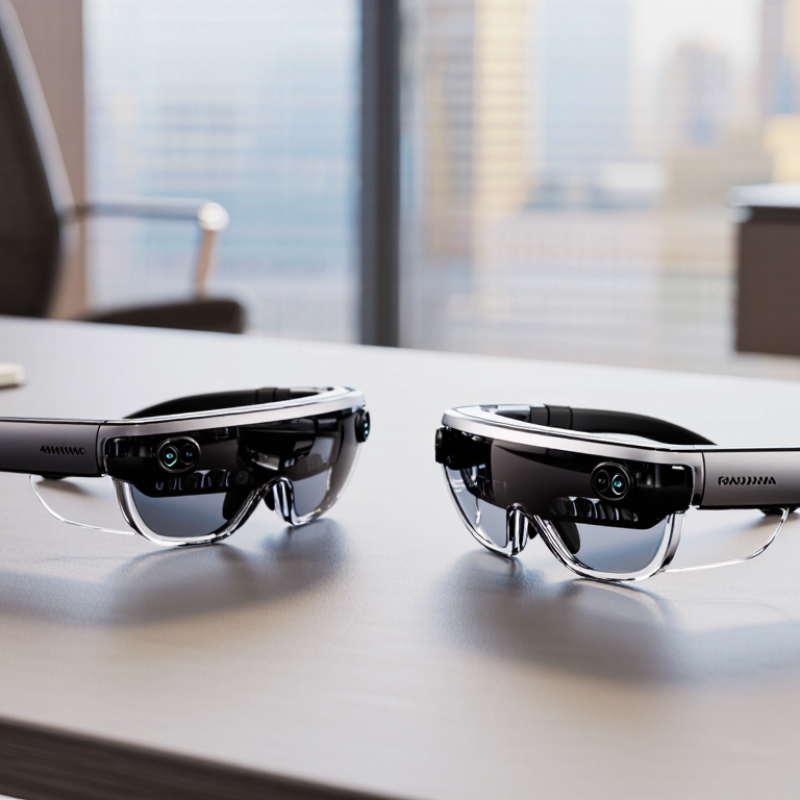
Open-ear audio smartglasses place miniature speakers in the frame arms and direct sound toward the ears. Most use air-conduction audio, unlike bone-conduction devices, which transmit vibrations through the skull. They also differ from earbuds: nothing needs to sit inside the ear canal. That distinction matters. Wearers can hear some surrounding sounds while listening, though busy streets or loud rooms may still mask them.
The World Health Organization’s 2021 World Report on Hearing estimates that 1.5 billion people live with some degree of hearing loss; that figure could reach 2.5 billion by 2050. This is useful context, not proof that open-ear glasses protect hearing or suit every listener. Fit, volume, speaker direction, and background noise all affect the experience. A practical test is simple: play speech at a comfortable level, then check whether nearby conversation remains clear. Still, “open” is not magic. Audio may leak toward people nearby, and small speakers can struggle with deep bass. These glasses combine eyewear, microphones, controls, and wireless audio, but their sound remains more exposed than sealed headphones.
Open-ear audio smartglasses keep the ear canal uncovered, so sound mixes with the room around you. Small speakers near the temples direct audio toward your ears. In a quiet office, voices and navigation cues can feel clear without blocking nearby conversation. Outdoors, traffic and wind may compete with playback. Sound leakage is possible, especially at higher volume. Not ideal for every setting.
Microphones usually sit along the frame and pick up speech for calls or voice commands. Their performance depends on placement, wind filtering, and background noise. A calm indoor call may sound natural; a breezy street can make words harder to catch. Test a call in the places you actually use the glasses. The result can disappoint.
Smart features often include touch or voice controls, call handling, and connections to a phone. Some models may offer spoken notifications or a companion app for adjusting settings. Check how controls work while walking, and whether notifications can be muted quickly. Battery life varies with volume, calls, and feature use, so published figures are best treated as estimates. Comfort matters too: even a useful frame can feel tiring after several hours. I would not assume every feature works equally well in daily life.
Top Open Ear Audio Smartglasses for Global Buyers
Comparing open-ear audio smartglasses across markets means looking beyond advertised battery life. Check Bluetooth version, supported audio codecs, microphone behavior, and whether controls remain usable with gloves or while walking. Bluetooth SIG’s 2024 Market Update forecasts 7.5 billion Bluetooth device shipments annually by 2028. That total covers many product types, not smartglasses alone, but it highlights why connection stability and device compatibility deserve careful testing.
Fit varies across faces and climates. A frame that sits securely in a cool showroom may slip in humid weather or press against a helmet strap. Compare weight, nose-pad adjustment, speaker leakage, and performance in a noisy street. Short tests help. For global buyers, also verify charging options, replacement-part access, app language support, and compatibility with common phone operating systems. GSMA’s The Mobile Economy 2024 reports 5.6 billion unique mobile subscribers at the end of 2023; this is useful context, not proof that every phone supports every feature.
Ask sellers for measured playback time at a stated volume, not just a best-case figure. Check warranty coverage and service arrangements in the destination market. One caveat: published lab results rarely match every listener’s fit or daily routine. I would compare the same audio track outdoors and indoors, then record call clarity and comfort after an hour. Small details matter.
| Comparison dimension | What to check | Useful comparison data | Global-market considerations |
|---|---|---|---|
| Open-ear audio and sound leakage | Listen for speech clarity, music balance, and how much sound is audible to nearby people. | Compare listening tests at the same volume in a quiet room and a noisy public setting; note whether the glasses have adjustable audio modes. | Open-ear designs do not seal the ear canal, so outside noise can affect listening and nearby people may hear audio, especially at higher volumes. |
| Call microphone performance | Check voice pickup, wind handling, and background-noise reduction during calls. | Compare recorded calls indoors, outdoors, and in light wind using the same phone and network where possible. | Microphone results depend on fit, wind direction, phone software, and the calling app; seek independent tests as well as manufacturer claims. |
| Bluetooth and device compatibility | Confirm supported Bluetooth version, codecs, multipoint support, and compatibility with the intended phone and operating system. | Record the supported profiles and codecs, number of devices that can be paired, and whether switching between devices is automatic. | Bluetooth operates in the 2.4 GHz band, but supported features and performance can differ by device, software, and local radio environment. |
| Battery life and charging | Compare continuous audio runtime, standby time, charging time, and whether a case or cable is required. | Compare manufacturer figures with independent tests at a stated volume and with consistent call, audio, and connection settings. | Battery runtime changes with volume, temperature, wireless use, and battery age. For air transport, confirm that lithium batteries meet applicable transport requirements, including UN 38.3 testing where required. |
| Fit, weight, and all-day comfort | Assess frame weight, nose-pad options, temple pressure, balance, and comfort with the wearer’s head shape. | Compare total weight, available frame sizes, adjustment options, and comfort after a longer wear test. | Fit varies between individuals. Check return terms and local availability of replacement nose pads or other fit accessories. |
| Lenses and prescription support | Check lens type, tint options, prescription range, and whether lenses can be replaced by a local optician. | Document supported prescription limits, lens dimensions, replacement process, and the availability of clear, sun, or photochromic lenses. | Prescription availability and optical fitting rules vary by country. Verify UV-protection claims and lens suitability with a qualified optical professional. |
| Durability and water resistance | Look for a stated IP rating, frame material, hinge durability, and the manufacturer’s care instructions. | Compare the exact IP code and test conditions rather than relying on terms such as “water-resistant” alone. | IP ratings are based on defined ingress-protection tests; they do not automatically mean a device is suitable for swimming or saltwater exposure. |
| Controls, app, and accessibility | Review physical controls, voice-assistant support, app languages, firmware updates, and accessibility features. | Check supported languages, control customization, update policy, and whether core audio functions work without a cloud account. | Language support, assistant availability, and app features can differ by country, phone platform, and software version. |
| Privacy and data handling | Determine what information the companion app collects, where it is stored, and whether account creation is required. | Review the privacy notice, permissions, data deletion process, and whether voice features process data locally or online. | Privacy obligations vary by jurisdiction. Buyers should review the applicable local privacy notice and data-transfer disclosures. |
| Local approvals, warranty, and service | Confirm local radio-equipment compliance, warranty coverage, repair options, and availability of replacement parts. | Record the local compliance marking, warranty duration and exclusions, service address, and expected repair or replacement process. | Radio-equipment approval and consumer-warranty rules differ across markets. Verify that the exact regional version is authorized for sale and supported locally. |
Leading open-ear audio smartglasses balance everyday listening with awareness of nearby sounds. Their speakers sit near the ears rather than sealing the ear canal. This can make a walking conversation or station announcement easier to notice. Small details matter. The best designs keep audio clear at moderate volume and limit sound leakage in quiet rooms. Performance varies with fit, surroundings, and listening habits, so a short indoor test may not predict outdoor results.
Strengths differ by design. Lightweight frames can feel comfortable during a commute, while sturdier hinges may better tolerate frequent use. Some models offer clearer call microphones, useful near traffic or in a breezy park, though wind can still affect voice quality. Battery life, charging time, and phone compatibility deserve equal attention. A frame that sounds good but presses behind the ears may become tiring after an hour. Fit remains personal, and product specifications cannot fully capture it. Check whether controls are easy to use without looking, and whether the lenses suit your daily needs. Audio glasses are not a substitute for hearing protection or focused listening in noisy environments.
A brand-neutral look at a practical strength: advertised continuous music playback time.
Many open-ear audio smartglasses advertise roughly 4–8 hours of music playback per charge. Actual runtime varies by model, volume, call use, and battery condition. Their open-ear design leaves the ear canal unsealed, which can help users remain aware of surrounding sounds.
Open-ear audio smartglasses can work across many markets, but compatibility is not automatic. Check that the glasses support your phone’s operating system and that their companion app is available in your region. A phone may pair successfully while app features, voice controls, or firmware updates remain unavailable. Small detail. Confirm Bluetooth profiles and charging requirements before ordering, especially when buying from another country.
Regional pricing can be harder to compare than the listed price suggests. Delivery fees, local taxes, currency conversion, and return shipping may change the final cost. Ask the seller whether the quoted price includes local taxes and where warranty service is handled. A low price may come with a costly return. Also check whether replacement nose pads or charging cables can be purchased nearby.
Compare more than audio specifications. Try the glasses, if possible, and check whether they stay comfortable after an hour of walking or commuting. Fit varies with head width, prescription needs, and lens options. Open-ear designs also let surrounding sound in, which can be useful outdoors but less effective in noisy stations. I would not treat a feature list as proof of everyday comfort; that judgment needs a real wear test.
They place small speakers in the frame arms and direct sound toward your ears. Nothing sits inside the ear canal.
Earbuds sit inside the ear canal. Bone-conduction devices send vibrations through the skull; these glasses usually use air-conduction audio.
Often, yes, but loud traffic or a busy room can mask them. “Open” does not mean every sound stays clear.
Sound can leak outward, especially in quiet spaces. Small speakers may also struggle with deep bass.
Play speech at a comfortable volume, then see whether nearby conversation remains clear. That test is imperfect, but useful.
Check Bluetooth compatibility, supported audio codecs, microphone quality, and whether controls work with gloves. Phone compatibility can vary.
Try the frames while walking and wearing a helmet, if relevant. Humidity may make them slip, while tight nose pads can press after an hour. Fit still varies.
Ask for playback time measured at a stated volume, not just a best-case figure. Check charging options, replacement parts, warranty coverage, and local service. Short tests help.
Open-ear audio smartglasses combine eyewear with small speakers that direct sound toward the ears while leaving them uncovered. This design can support awareness of nearby sounds and provide a more open listening experience than conventional headphones. Depending on the model, users may also find microphones for calls, touch or voice controls, and connected features such as audio playback or access to a phone’s assistant. Comparing these glasses means looking beyond appearance: comfort, sound clarity, microphone performance, battery life, durability, controls, and compatibility with mobile devices all affect everyday use.
For buyers in different regions, availability, pricing, prescription options, language support, connectivity, and charging standards may vary. A useful choice depends on how the glasses will be used—such as for calls, travel, work, or casual listening—and on whether they fit comfortably for extended wear. By weighing practical features against local availability and personal needs, global buyers can identify a model that offers a suitable balance of convenience, audio performance, and value.