Free tracked shipping over US$199 in North America · solos AirGo™ V2 with photochromic lens now shipping
Choosing among the Top 10 Types of Clip-on Prescription Lenses is not simply a style decision. It affects comfort, visual clarity, glare control, and everyday convenience. A morning commute, bright supermarket aisle, or outdoor lunch can reveal differences that product photos hide. Clip-on prescription lenses may include polarized, photochromic, blue-light filtering, anti-reflective, tinted, magnetic, flip-up, rimless, custom-fit, and driving-focused designs.
Optometrist Dr. Gary Heiting highlights the value of glare reduction: “Polarized lenses are especially helpful for driving, boating, fishing and other activities where glare is a problem.” His observation supports a practical point: lens performance should match the wearer’s routine. Polarized clip-ons can reduce reflected glare from wet roads, while photochromic options respond to changing light. However, they may not darken equally inside every vehicle. Small details matter.
Fit matters more than expected.
A reliable comparison should examine prescription accuracy, bridge stability, lens coverage, attachment strength, and compatibility with existing frames. Magnetic models often feel cleaner, but their magnets can add weight. Flip-up versions offer convenience, yet the hinge may loosen with repeated use. Some blue-light claims also sound stronger than the available evidence. That deserves caution.
This guide examines ten common types of Clip-on prescription lenses, using practical benefits, limitations, and realistic use cases. The best choice is rarely the most expensive one. It is the option that stays secure, preserves clear vision, and fits naturally into daily life.
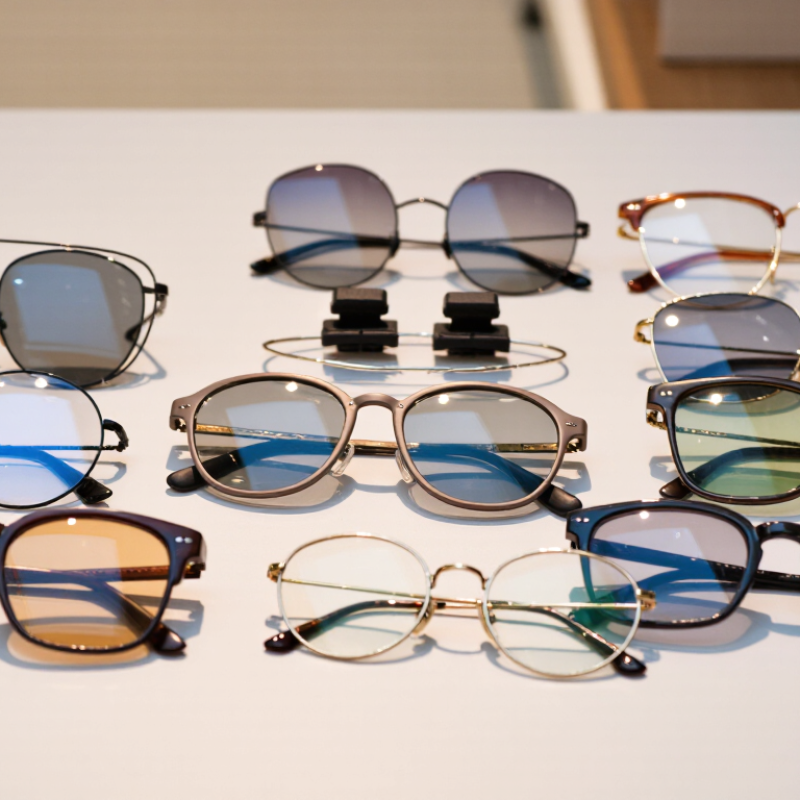
Clip-on prescription lenses are detachable optical lenses designed to provide vision correction without replacing an entire frame. They attach with magnets, clips, hinges, or small spring arms. The lens power is prescribed for each eye, much like standard prescription glasses. However, not every clip-on offers correction. Some are only tinted, polarized, photochromic, or blue-light filtering overlays.
A qualified optician checks the prescription, pupillary distance, lens height, and attachment position. These measurements matter because poorly aligned optical centers can cause blur, eye strain, or headaches. The frame must also fit securely. A loose clip-on may shift when walking, driving, or looking down. In my experience, magnetic designs feel convenient, while hinged styles can be easier to lift indoors. Neither option is automatically better.
Common types include polarized sun lenses, tinted driving lenses, photochromic lenses, computer-focused lenses, sports lenses, anti-glare lenses, flip-up designs, magnetic lenses, spring-clip lenses, and custom-made prescription overlays. Polarization can reduce reflected glare from wet roads, but it may affect visibility on some digital displays. Photochromic lenses may darken slowly in cold weather or inside a vehicle. This is where expectations need adjustment. Always confirm UV protection and coating details with the optical provider, rather than trusting a product description alone. A recent eye examination also helps ensure the prescription remains suitable.
Clip-on prescription lenses are classified by more than their appearance. The first feature is lens design: single-vision lenses correct one viewing distance, while bifocal and progressive designs support multiple distances. Prescription range also matters. Stronger powers may require thicker lenses, larger clips, or better weight distribution. An optician should verify the prescription and optical center before fitting.
Attachment style creates another useful category. Magnetic clips are quick to remove, while hinged, flip-up, and spring-mounted designs can offer different levels of stability. A secure clip should sit evenly across the frame without pressing painfully on the nose. Frame compatibility depends on bridge width, lens shape, and rim thickness. Small gaps may cause glare or allow light to enter from the sides.
Materials and optical treatments further separate these lenses. Polycarbonate and other impact-resistant materials can reduce weight, but visual clarity may vary between products. Anti-reflective coatings help in bright offices and during evening driving, although fingerprints can become more noticeable. Polarized versions reduce reflected glare outdoors, but some digital displays may appear darker. Practical testing is important. A clip can look perfectly aligned and still feel unbalanced after an hour. Classification guides are useful, but they cannot replace careful fitting, accurate measurements, and personal comfort checks.
Clip-on prescription lenses can serve different daily vision needs. Reading clips support close work, while distance clips help with signs and outdoor viewing. Progressive clips provide near, intermediate, and far correction in one lens. Computer clips suit screen distances, although the correct working range must be measured. Astigmatism-corrected clips sharpen tilted or blurred details. Prism clips may assist people with specific binocular vision problems, but they require professional fitting. Prescription polarized sun clips reduce glare from roads and water. Photochromic clips darken outdoors and clear indoors, though they may react slowly inside vehicles. Anti-reflective clips can reduce distracting reflections. Low-vision specialty clips may enlarge or improve contrast for selected tasks.
Small details matter. An optician should check your prescription, pupillary distance, optical centers, and clip alignment. A loose bridge can shift the lens and create headaches. Heavy clips may also pull frames downward. In my experience, users often choose strong reading power for comfort, then discover blurred computer vision. That choice needs reconsideration. Prescription changes should follow a complete eye examination, not online guesswork.
Tips: Match the clip to one main task. Test it while reading, walking, and viewing a screen. Check glare near windows. Keep the clip centered. Clean it with lens-safe materials. If dizziness, eye strain, or double vision continues, stop using it and ask an eye-care professional for advice. Even a well-made clip can be unsuitable when the frame shape or prescription is wrong.
Top 10 Types of Clip On Prescription Lenses
Clip-on prescription lenses work best when their attachment matches the frame. The ten common designs include magnetic, spring-clip, flip-up, hook-over, bridge-clamp, side-arm, rimless bridge, polarized, photochromic, and blue-light filtering versions. Magnetic systems look clean but require compatible metal points. Spring clips suit thicker rims, though their pressure may mark delicate finishes. Hook-over models fit quickly. They can slide during movement.
Materials affect weight, safety, and optical clarity. Polycarbonate lenses are light and impact-resistant, while high-index resin reduces thickness for stronger prescriptions. Standard resin often provides better optical value but may feel heavier. Polarized filters reduce reflected glare near water or roads. Photochromic lenses darken outdoors, but their speed changes with temperature. The World Health Organization reports that at least 2.2 billion people have near or distance vision impairment, making accurate prescription alignment important (WHO, World Report on Vision).
Frame measurements should include bridge width, lens height, rim thickness, and temple spacing. A half-rim frame may reject a standard full-frame clip. Rimless frames need specialized bridge or side-arm fittings. The Vision Council’s 2023 Consumer inSights Report found that roughly three quarters of U.S. adults use vision correction, so comfort deserves serious attention. ISO 12870 also emphasizes frame durability and dimensional performance. Still, standards do not guarantee a perfect fit. A clip can wobble. An optician should verify optical centers, especially for high prescriptions. I would not trust a universal clip without testing it over a full day.
| Rank | Clip-On Prescription Lens Type | Typical Frame Compatibility | Common Lens Materials | Attachment Design | Prescription Range | Key Advantages | Common Limitations | Best Use Case |
|---|---|---|---|---|---|---|---|---|
| 1 | Magnetic Clip-On | Frames fitted with concealed or visible magnetic connection points; works best when the overlay closely matches the frame shape. | Polycarbonate, high-index plastic, CR-39, or glass depending on prescription and design. | Small magnets align the prescription overlay with a compatible carrier frame. | Low to high prescriptions, subject to lens thickness, weight, and frame support. | Fast attachment, clean appearance, and no pressure on the bridge or temples when properly fitted. | Requires compatible magnetic hardware; exposed magnets may collect small metallic particles. | Everyday prescription sunglasses or interchangeable sun and clear lens systems. |
| 2 | Flip-Up Clip-On | Most suitable for full-rim or semi-rimless frames with enough clearance above the prescription lenses. | Polycarbonate, nylon-based lens materials, CR-39, or lightweight high-index plastic. | A hinge allows the tinted or specialty lens to pivot upward while remaining attached. | Low to moderate prescriptions are generally more practical because excess weight can strain the hinge. | Convenient transition between covered and uncovered vision without removing the accessory. | Can add height and weight; the hinge may loosen with repeated use. | Driving, indoor-outdoor transitions, and situations requiring occasional glare protection. |
| 3 | Spring-Clip-On | Compatible with many full-rim frames when the clip dimensions match the lens width and bridge position. | Polycarbonate, CR-39, acrylic, or lightweight high-index plastic. | Spring-loaded clips grip the frame at the bridge and usually at the upper rim or lens edges. | Low to moderate prescriptions; heavy lenses may reduce comfort and stability. | Widely adaptable, easy to install, and usually less dependent on special frame hardware. | Contact points may mark delicate coatings or frame finishes if poorly adjusted. | Occasional use with conventional optical frames. |
| 4 | Hook-On Clip-On | Full-rim frames with accessible temple arms and enough space behind the frame front. | Polycarbonate, nylon-based materials, CR-39, or thin high-index plastic. | Small hooks or tabs engage the frame front, bridge, or temple areas to hold the overlay in place. | Low to moderate prescriptions are generally preferred for reduced weight. | Simple construction, low profile, and no permanent modification to the eyeglass frame. | Fit can vary between frame shapes; hooks may interfere with slim or highly curved temples. | Users who want a removable accessory for occasional outdoor wear. |
| 5 | Full-Frame Overlay | Best for full-rim frames with a similar overall shape and sufficient clearance around the entire lens area. | Polycarbonate, CR-39, acrylic, or lightweight high-index plastic. | A complete secondary frame surrounds the lenses and attaches with clips, tabs, magnets, or bridge supports. | Low to high prescriptions, depending on the overlay size, lens thickness, and attachment strength. | Provides broad coverage and can improve protection from side light and wind. | Usually bulkier than partial clips and may feel less balanced on lightweight frames. | Outdoor activities, strong sunlight, and users needing wider visual coverage. |
| 6 | Rimless Bridge-Mount Clip-On | Rimless or drilled frames with a stable bridge and adequate space for a central attachment point. | Polycarbonate, nylon-based plastic, or thin high-index plastic to minimize weight. | The overlay is supported mainly by a bridge clip, nose support, or central mounting mechanism. | Low to moderate prescriptions are usually more suitable because the attachment carries much of the load. | Light visual profile and minimal coverage of the original frame. | Less secure on frames with flexible bridges; alignment may shift if the bridge is not properly matched. | Rimless eyewear and users prioritizing a discreet appearance. |
| 7 | Nose-Pad Supported Clip-On | Frames with a stable bridge or nose-pad area that can accommodate an additional support structure. | Polycarbonate, CR-39, nylon-based materials, or lightweight high-index plastic. | Adjustable nose pads or a bridge rest support the overlay, often combined with small frame clips. | Low to moderate prescriptions are most comfortable; higher powers may require stronger support. | Can reduce contact with the original lens surface and allows some fit adjustment. | May alter nose pressure, leave marks, or sit too close to the eyelashes if poorly adjusted. | Frames where upper-rim clips are unsuitable or where adjustable positioning is needed. |
| 8 | Side-Arm or Temple-Grip Clip-On | Frames with sufficiently wide, accessible temple arms and a front shape that matches the overlay. | Polycarbonate, CR-39, nylon-based plastic, or thin high-index plastic. | Side arms or flexible grips wrap around or engage the temples to stabilize the accessory. | Low to moderate prescriptions are typically preferred to limit lateral weight. | Can provide improved side-to-side stability during movement. | May conflict with thick, highly curved, or heavily styled temple arms. | Active users who need a firmer hold during walking or light outdoor activity. |
| 9 | Polarized Clip-On | Compatible with frames that can support a standard clip, magnetic overlay, flip-up unit, or full-frame attachment. | Polarized polycarbonate, polarized nylon-based plastic, or polarized glass. | Uses an underlying clip mechanism; polarization is a lens-filter feature rather than a separate attachment method. | Low to moderate prescriptions are common; higher powers depend on lens thickness and carrier design. | Reduces reflected glare from surfaces such as roads, water, and snow. | May make some digital displays appear dim or show angle-dependent patterns. | Driving, boating, fishing, snow activities, and bright reflective environments. |
| 10 | Photochromic Clip-On | Works with compatible clip, magnetic, hook-on, or full-frame overlay systems. | Photochromic polycarbonate, photochromic plastic, or photochromic high-index plastic. | Uses a conventional attachment mechanism while the lens changes darkness in response to ultraviolet exposure. | Low to high prescriptions, depending on the lens material, thickness, and mounting design. | Automatically adapts to changing outdoor light without manual replacement. | Activation is affected by temperature and UV exposure; many vehicle windshields reduce UV and may limit darkening. | Users who move frequently between indoor spaces and outdoor environments. |
Choosing clip-on prescription lenses begins with your daily routine, prescription strength, and existing frame shape. Magnetic, hinged, and flip-up designs suit different habits. Magnetic clips are quick to remove, while hinged models stay attached during short indoor breaks. Flip-up lenses work well when lighting changes often.
Ask an optician to check your prescription, pupillary distance, and frame compatibility. The clip should sit evenly without touching your eyelashes. It should not pull the frame downward. Polarized lenses reduce reflected glare near water and roads, but some digital screens may look darker. Photochromic lenses adjust outdoors, although they may react slowly inside vehicles. Tinted, anti-reflective, sports, night-driving, and blue-light filtering options also require careful purpose-based selection. My first choice was too dark for evening use. That mistake was useful.
Clean the lenses with lukewarm water and a small amount of mild soap. Dry them with a clean microfiber cloth. Paper towels can leave tiny scratches. Store the clip-on in a hard case, not loose beside keys. Check magnets, hinges, and nose pads every few weeks. A loose hinge can change the lens position and create uneven vision. Avoid hot dashboards and strong household cleaners. They can damage coatings or distort plastic. If the clip causes headaches, glare, or blurred edges, stop using it and arrange a professional fitting. Sometimes the problem is not the lens. It may be a crooked frame.
They are detachable lenses that correct vision without replacing the entire frame. They attach using magnets, clips, hinges, or spring arms. Some provide no prescription correction.
An optician checks the prescription, pupillary distance, lens height, and attachment position. Accurate optical centers matter. Poor alignment may cause blur, eye strain, or headaches.
Common styles include magnetic, spring-clip, hinged, flip-up, hook-over, bridge-clamp, and side-arm designs. Magnetic clips remove quickly. Hook-over models may shift during movement.
Check the bridge width, lens shape, rim thickness, and temple spacing. Half-rim and rimless frames may need special fittings. A universal clip may not fit securely.
Polycarbonate is lightweight and impact-resistant. High-index resin can reduce thickness for stronger prescriptions. Standard resin may cost less but feel heavier. Optical clarity can vary.
Polarized lenses can reduce glare from wet roads, water, and bright surfaces. Some digital displays may look darker. Test them before relying on them regularly.
They darken outdoors and become clearer indoors. Cold temperatures may slow the darkening process. Inside some vehicles, they may not darken fully.
Confirm UV protection, lens coatings, prescription accuracy, and frame compatibility. Do not rely only on product descriptions. A recent eye examination is helpful.
They should sit evenly without painful pressure on the nose. A clip may look aligned but feel unbalanced later. I would test it for a full day.
Clip-on prescription lenses offer a practical way to add vision correction to compatible eyewear without replacing the entire frame. Designed to attach securely over or behind regular lenses, they can be classified by their prescription purpose, including single-vision, reading, distance, and specialized options for different visual needs. Other important differences include lens shape, thickness, optical strength, tint, light-filtering properties, and whether the design is intended for indoor, outdoor, or changing light conditions.
Choosing the right Clip-on prescription lenses also depends on frame compatibility, lens material, weight, and attachment style. Magnetic, hinged, clip, and slide-on designs each provide different levels of convenience and stability. Users should consider accurate prescription measurements, comfortable alignment, and a secure fit before purchasing. Regular cleaning with suitable materials, careful storage, and periodic inspection of the attachment points can help maintain clarity and extend the lenses’ useful life.