Free tracked shipping over US$199 in North America · solos AirGo™ V2 with photochromic lens now shipping
Sourcing Hydro X smartglasses wholesale requires more than finding the lowest online price. A reliable process begins with verified supplier information, clear product specifications, and realistic delivery expectations. Buyers should confirm whether the supplier is an authorized distributor, manufacturer, or independent trading company. That distinction affects warranty support, documentation, and long-term supply.
Request a complete quotation before discussing large orders. It should show the unit price, minimum order quantity, customization fees, packaging options, payment terms, and shipping method. Ask for a sample pair first. Examine the frame finish, lens clarity, charging connection, controls, and comfort after several hours of wear. Small details matter. A loose hinge can become a costly complaint.
Product claims also deserve careful checking. Confirm battery performance, connectivity features, software compatibility, and available languages through written specifications. Do not rely only on attractive marketplace images. Ask for test reports, user manuals, warranty conditions, and relevant conformity documents for your target market. Requirements can differ between countries and sales channels.
Supplier communication reveals practical experience. A professional seller answers technical questions directly and explains limitations without exaggeration. Still, even experienced buyers can miss hidden costs, especially customs handling, replacement units, and delayed accessories. I have found that a simple landed-cost worksheet prevents many unpleasant surprises.
This guide explains how to compare Hydro X smartglasses wholesale offers, evaluate supplier credibility, negotiate responsibly, and build a safer purchasing plan. The goal is not merely a cheaper quote. It is dependable inventory, documented quality, and support that remains useful after payment. That part is often overlooked.
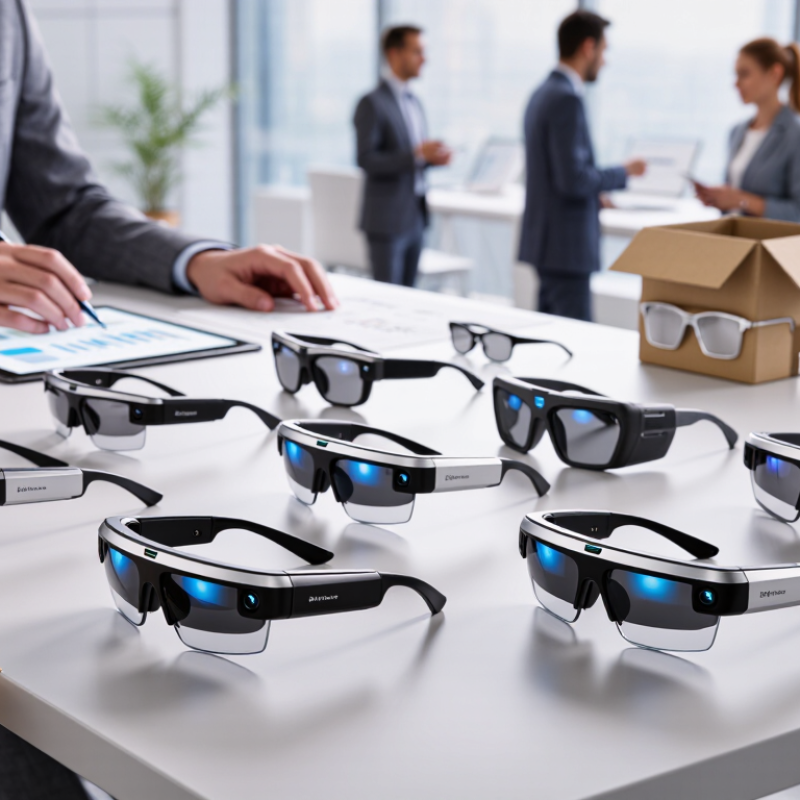
Understanding Hydro X Smartglasses means examining their practical wholesale value, not only their appearance. These devices may support hands-free instructions, remote assistance, inventory checks, and field training. Grand View Research estimated the global smart glasses market at about USD 1.4 billion in 2023. Its report also forecasts a 27.1% compound annual growth rate from 2024 to 2030. That growth suggests stronger demand from logistics, healthcare, manufacturing, and enterprise training. Still, market forecasts are not purchase guarantees. A distributor should test comfort, battery duration, display clarity, software compatibility, and after-sales support before placing a large order.
Tips: Request product samples before negotiating volume pricing. Ask for measured battery performance under continuous use, not laboratory claims. Check whether replacement parts, firmware updates, warranty procedures, and user manuals are available. GSMA Intelligence reports that mobile technologies generated 5.5% of global GDP in 2023, showing how deeply connected tools influence business operations. However, connectivity alone does not create value. A warehouse worker may reject glasses that feel heavy after two hours. That small detail can damage adoption. Wholesale buyers should also compare minimum order quantities, packaging quality, regional charging standards, and training materials. One overlooked issue is data handling. Confirm access controls and retention practices with the supplier. The cheapest quotation may become expensive after returns and support delays.
How to Source Smartglasses Wholesale?
Defining product requirements should come before requesting wholesale prices. Grand View Research estimated the global smart glasses market at about US$1.4 billion in 2023. It also projects strong growth through 2030. That growth does not justify buying every feature. It requires a clear use case.
For office users, prioritize readable displays, lightweight frames, voice control, and reliable Bluetooth connectivity. For field technicians, add dust resistance, replaceable lenses, long battery life, and clear microphones. For retail customers, comfort matters more than technical novelty. A frame under 50 grams may feel practical during a full workday. Battery performance should be tested with continuous audio and display use, not standby claims. Small details decide returns.
Counterpoint Research reported double-digit shipment growth for smart glasses during 2024, showing rising market interest. However, demand differs sharply between professional and lifestyle buyers. Define target groups by task, budget, and wearing time. Ask suppliers for optical test results, battery-cycle data, sample inspection records, and warranty terms. Request five to ten samples from different production batches. One sample can hide inconsistent assembly. A first specification is rarely perfect. I would leave room for revision after user trials, especially for nose pressure, heat, and control learning time. The mistake is treating a feature list as a customer strategy.
Finding a reliable smartglasses supplier requires more than comparing wholesale prices. In practical sourcing work, I examine product samples before discussing large orders. The frame should feel balanced, not front-heavy. Check the hinge, nose pads, lens clarity, and charging connection by hand. Small defects often reveal weak quality control.
Ask suppliers for factory details, test reports, material specifications, and recent production photos. Verify whether the stated battery capacity matches actual testing results. Request a sample with the same lens, software, and accessories planned for bulk production. A clear supplier should explain minimum order quantities, lead times, packaging, warranty terms, and replacement procedures. Vague answers create expensive delays.
Communication matters. Send the same technical questions to several suppliers and compare their replies. Reliable teams usually provide consistent measurements and realistic delivery dates. Be cautious when a supplier promises every feature immediately. Some functions may depend on regional requirements, mobile compatibility, or software updates. I once focused too heavily on unit cost and underestimated packaging damage during transit. That mistake changed my evaluation process. Now I ask for a drop-test plan and inspect ten random units from a trial batch. Not perfect, but more useful. A written inspection checklist can cover weight, charging time, wireless connection, display alignment, and cosmetic marks. Keep records of every revision before approving production.
| Evaluation Dimension | Recommended Wholesale Benchmark | Evidence to Request | Risk Indicator | Suggested Score |
|---|---|---|---|---|
| Product Identity and Configuration | The supplier should specify the exact smartglasses configuration, including display type, camera or sensor options, operating system, connectivity, storage, battery capacity, and included accessories. | Complete technical datasheet, product photographs, firmware version, accessory list, and a physical sample matching the quotation. | Specifications change between quotation, sample, and production batch. | 0–10 points |
| Minimum Order Quantity | For an initial wholesale test order, a practical planning range is commonly 10–100 units, depending on customization, inventory status, and packaging requirements. | Written MOQ for stocked units, customized units, replacement parts, and mixed-color or mixed-configuration orders. | High MOQ before product validation or unclear rules for mixed orders. | 0–8 points |
| Wholesale Pricing and Total Landed Cost | Compare unit price together with tooling, packaging, inspection, payment fees, freight, customs duties, taxes, and replacement-part costs rather than using unit price alone. | Formal quotation with Incoterms, validity period, packaging dimensions, shipping weight, payment schedule, and all optional charges. | Unusually low pricing, hidden fees, or requests for full payment before order verification. | 0–10 points |
| Production and Dispatch Lead Time | A reasonable planning benchmark is approximately 7–15 business days for available stock and 20–45 business days for standard production, excluding transport and customs clearance. | Production schedule, inventory confirmation, holiday-calendar impact, dispatch commitment, and shipment tracking procedure. | Lead time is only verbal, changes after payment, or excludes key production stages. | 0–8 points |
| Quality Management | The supplier should maintain documented incoming, in-process, and final inspection procedures, with batch traceability and a defined defect-handling process. | Quality-control checklist, sample inspection report, batch code format, corrective-action records, and acceptance criteria. | No traceability, no inspection records, or refusal to permit independent pre-shipment inspection. | 0–12 points |
| Regulatory Compliance | For the destination market, verify applicable requirements such as electrical safety, electromagnetic compatibility, radio equipment, substance restrictions, and product labeling. | Valid test reports and declarations for the exact model, supported frequency bands, user manuals, labels, and country-specific documentation. | Generic certificates that do not identify the model, outdated reports, or documents issued for another product. | 0–15 points |
| Battery and Shipping Safety | Lithium-battery products should have transport documentation and packaging appropriate to the battery type, capacity, and shipment method. | Battery specification, UN 38.3 test summary, safety data where applicable, packaging instructions, and air-shipping declaration. | Unclear battery origin, missing transport documents, swelling reports, or unsupported claims about battery life. | 0–10 points |
| Water, Dust, and Durability Claims | Treat an IP rating as valid only when it applies to the complete device configuration and is supported by a test report; do not assume water resistance from marketing language. | IP test report, operating-temperature range, drop or vibration test results, and written warranty exclusions. | “Waterproof” wording without an IP level, test method, or limitation statement. | 0–8 points |
| Software, Connectivity, and Data Protection | Confirm compatibility with the intended mobile or enterprise environment, supported wireless standards, update policy, application permissions, and handling of recorded data. | Compatibility matrix, software-development documentation, update history, privacy policy, security controls, and account or cloud requirements. | Unstable application, discontinued software support, mandatory unknown cloud services, or unclear data ownership. | 0–12 points |
| Warranty and After-Sales Service | A clearly written 12-month limited warranty is a useful minimum purchasing benchmark, subject to local law and the final sales contract. | Warranty period, return-material authorization process, repair or replacement timeline, spare-parts list, and support response target. | Warranty excludes common failures, requires expensive return shipping, or has no defined response time. | 0–10 points |
| Sample and Pilot-Order Testing | Purchase and test at least one sample before a larger order; for operational use, a small pilot batch can reveal defect, connectivity, comfort, and workflow issues. | Sample invoice, functional test results, battery-cycle observations, fit feedback, packaging inspection, and pilot-order defect log. | Supplier discourages sampling or sends a sample with different firmware, accessories, or specifications from the production order. | 0–10 points |
| Contract and Payment Protection | Use a purchase agreement covering specifications, inspection rights, delivery dates, remedies, intellectual-property ownership, confidentiality, and payment milestones. | Signed sales contract, pro forma invoice, bank-account verification, secure payment option, and documented change-control procedure. | Personal payment accounts, pressure to pay immediately, refusal to sign specifications, or material changes without written approval. | 0–7 points |
| Maximum Evaluation Score | 100 points | |||
Wholesale smartglasses sourcing requires more than comparing the advertised unit price. Request a detailed quotation showing product cost, packaging, testing, shipping, and payment fees. A supplier offering 100 units at $85 may cost more than one offering 300 units at $72 after freight and inspection. I have learned that the cheapest quote is rarely the cheapest order. Ask for a working sample before committing to production.
Minimum order quantities can change your real business risk. A low MOQ supports market testing, but the unit price may be higher. A large MOQ may unlock better pricing, yet slow inventory turnover can reduce cash flow. Confirm whether the MOQ applies per model, color, or technical configuration. Supply terms also need careful review. Check production lead time, reorder timing, warranty handling, spare parts, and payment stages. Written terms are safer than friendly promises. Sometimes, even experienced buyers overlook replenishment delays.
Tips: Compare landed cost, not only factory price. Request two samples from different batches when possible. Verify product specifications, packaging details, and inspection records. Negotiate a smaller trial order with clear acceptance standards. Keep a simple cost sheet. It exposes weak assumptions. Also, ask what happens when delivery slips or a batch fails inspection. A supplier who answers precisely is usually easier to manage, though no supplier is perfect. Expect a few surprises, and plan a financial buffer.
Sourcing Smartglasses Wholesale: Samples, Compliance, Shipping, and Long-Term Orders
Request two or three samples before discussing large wholesale quantities. Test the display, camera, controls, charging port, and frame comfort. Use them for several days, not just during a quick demonstration. Our first sample looked excellent but overheated during a long video call. That small test changed our supplier evaluation.
Ask the manufacturer for clear technical files, including material details, battery specifications, user instructions, and applicable conformity documents. Match the documents with the exact sample version. A certificate for an older model may not support a new shipment. Check labeling, warranty terms, radio requirements, and privacy-related functions for your destination market. Local customs brokers can confirm current import procedures. Do not rely on verbal promises.
Shipping needs practical planning. Confirm carton dimensions, protective packaging, tracking responsibility, and insurance before payment. Battery-powered devices may require special transport declarations and approved packaging. Request a pre-shipment inspection with photographs, serial-number records, and a functional checklist. For repeat orders, agree on quality tolerances, spare parts, replacement timelines, and production changes in writing. Keep one approved sample as a reference. It prevents arguments later. Long-term cooperation still needs review. A supplier may improve one component while quietly changing another. That risk deserves attention.
Typical planning benchmarks for managing samples, compliance checks, shipping preparation, and long-term wholesale orders.
The timeline shows a practical business-day allocation for a standard wholesale sourcing cycle. Actual timing may vary according to sample revisions, product documentation, battery transport requirements, destination regulations, and order volume.
Define the main user, daily task, wearing time, and budget. A feature list alone is not a customer strategy.
Prioritize readable displays, lightweight frames, voice control, and stable Bluetooth. A frame below 50 grams may feel better all day.
Field users may need dust resistance, replaceable lenses, stronger microphones, and longer battery life. Retail buyers may value comfort more than novelty.
Compare landed cost, including packaging, testing, freight, inspection, and payment fees. The lowest unit price can still create the highest final cost.
A small MOQ reduces testing risk but may increase unit cost. A large MOQ can trap cash in slow-moving inventory.
Test the display, controls, charging port, audio, heat, and frame pressure. Use samples for several days, not only during a quick demonstration.
Request material details, battery specifications, user instructions, warranty terms, and applicable conformity documents. Match every document with the exact sample version.
Confirm carton size, protective packaging, tracking, insurance, and battery transport requirements. Request inspection photos, serial records, and a functional checklist.
Record quality tolerances, spare parts, replacement timing, production changes, and delivery responsibilities. Keep one approved sample as a physical reference.
Trusting friendly promises too quickly. I would leave room for revision after user trials, because the first specification is rarely perfect.
Sourcing Hydro X smartglasses wholesale requires a clear understanding of the product, its intended applications, and the customers it will serve. Buyers should define essential requirements such as display quality, battery life, connectivity, comfort, durability, software compatibility, and packaging before contacting suppliers. Identifying target groups, including outdoor users, enterprise teams, retailers, or technology enthusiasts, can also guide the ideal configuration and order volume.
Reliable sourcing depends on carefully evaluating suppliers through business credentials, product documentation, factory capabilities, quality-control procedures, communication, and previous export experience. Compare wholesale prices alongside minimum order quantities, customization options, payment terms, lead times, warranties, and replenishment capacity rather than focusing only on the lowest quote. Before placing a long-term order, request samples, conduct performance and compliance checks, confirm shipping arrangements, and review labeling and user documentation requirements. A structured evaluation process helps reduce supply risks and supports consistent quality, predictable delivery, and sustainable wholesale cooperation.