
Choosing the best Prescription smart glasses in China is not only a technology decision. It is also a vision-care decision. A bright display cannot compensate for inaccurate lenses, poor fitting, or weak after-sales support. As optometrist and wearable-technology adviser Dr. Justin Bazan puts it, “Prescription accuracy should come before every smart feature.”
That principle matters in China’s fast-growing eyewear market. Local brands may offer voice control, navigation, translation, photography, open-ear audio, and lightweight frames. Some models look like ordinary glasses, while others resemble compact laboratory equipment. The differences become obvious during daily use. A commuter may need stable Bluetooth connections. An office worker may value reading comfort. A person with high astigmatism may need customized lenses and careful optical measurements.
The best choice depends on more than advertised functions. Buyers should examine lens materials, prescription range, pupillary-distance support, frame balance, battery life, app language, repair access, and data practices. They should also confirm whether an optician can verify the final lenses before use. Small details matter. A loose nose pad can become irritating by lunchtime.
There is no perfect model. Some products promise more than they comfortably deliver. Others provide reliable eyewear but limited software. That weakness deserves attention, not excuses. Independent testing, transparent specifications, and professional fitting create stronger evidence than influencer enthusiasm. This guide compares China’s leading Prescription smart glasses through that practical lens, while recognizing that personal vision needs can change the final answer.
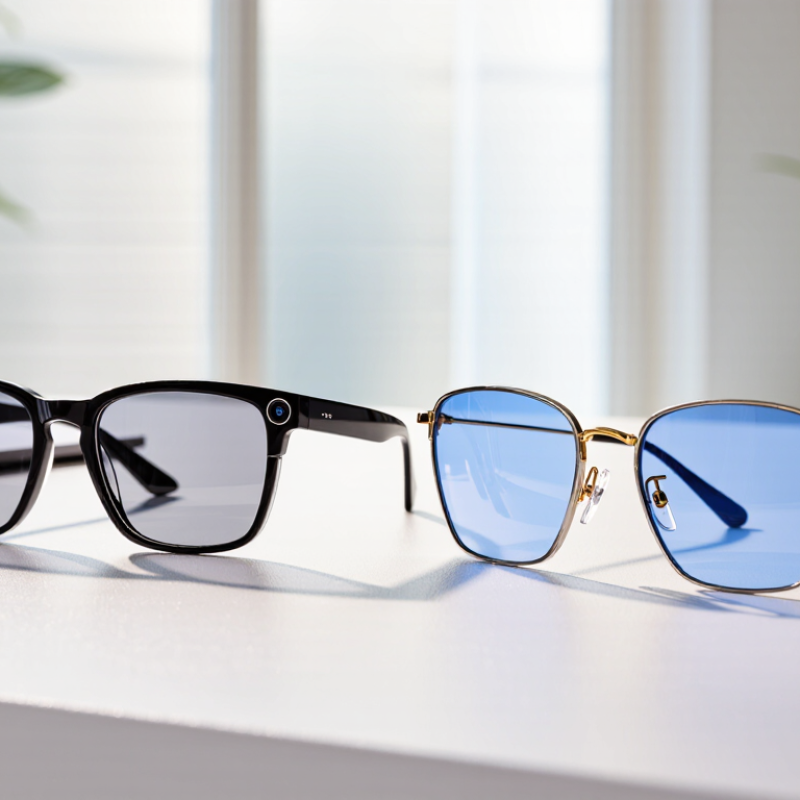
Prescription smart glasses combine corrective lenses with miniature computing hardware. They help users see clearly while accessing audio, notifications, cameras, or navigation. The prescription usually sits inside custom lenses, based on sphere, cylinder, axis, and pupillary distance measurements.
Tiny cameras capture images, while microphones detect voice commands. A processor interprets information and connects with a smartphone through Bluetooth or Wi-Fi. Some models use speakers near the ears. Others project text through a small display or optical waveguide. The experience can feel surprisingly natural. It can also feel distracting.
Counterpoint Research reported that global smart-glasses shipments increased 82% year over year in 2024. This growth suggests stronger consumer interest, including in China’s wearable technology market. However, shipment growth does not prove medical accuracy or everyday comfort. The World Health Organization estimates that at least 2.2 billion people have near or distance vision impairment, making reliable prescription fitting especially important.
A qualified optometrist should verify the prescription and pupillary distance. Frame pressure, lens thickness, battery heat, and glare deserve practical testing. Users should also question exaggerated claims about eye protection or artificial intelligence. Current devices may misread signs, voices, or surroundings. That limitation matters. Prescription smart glasses are useful tools, not replacements for professional eye examinations.
They combine corrective lenses with miniature computing hardware. The lenses use sphere, cylinder, axis, and pupillary distance measurements. They may provide audio, notifications, cameras, navigation, or visual prompts. Useful, but not magical.
Tiny cameras capture images, while microphones detect voice commands. A processor interprets information and connects with a smartphone through Bluetooth or Wi-Fi. Some models use speakers near the ears. Others project text through displays or optical waveguides.
A qualified optometrist should verify the prescription and pupillary distance. Small alignment errors may cause headaches after several hours. Lens thickness and frame pressure also need practical testing. I might underestimate comfort during a short fitting.
Lightweight frames can show turn directions without constant phone checks. Bright displays help outdoors, but excessive brightness may distract you. Battery life matters during long train journeys. A comfortable nose bridge can matter more than extra features.
Prescription accuracy is especially important for extended screen use. Voice controls can support meetings, note-taking, and hands-free research. Microphones may struggle in crowded cafés. That weakness is easy to overlook.
Outdoor users should look for stable connectivity, stronger frames, and weather resistance. Cyclists and hikers may value alerts, location sharing, and simple camera controls. These features should never replace normal road awareness. Stay alert.
Enlarged text and spoken descriptions may improve daily independence. Accessibility settings are not equally refined across every model. Users should test readability, spoken guidance, and field of view. Results can vary considerably.
Current devices may misread signs, voices, or nearby surroundings. They are useful tools, not replacements for professional eye examinations. Shipment growth does not prove medical accuracy or everyday comfort. Impressive specifications can still disappoint.
Test prescription comfort, field of view, control speed, battery performance, glare, and frame pressure together. Wear them during a realistic commute or work session. Check whether the frame feels heavy after several hours. My preference can change by situation.
Prescription smart glasses combine corrective lenses with digital functions such as hands-free notifications, audio, cameras, navigation support, and voice control. Their performance depends on how well the optical prescription, sensors, connectivity, battery, and companion software work together. The best China prescription smart glasses should offer clear vision, comfortable weight distribution, reliable controls, useful daily features, and a design that fits naturally into work, travel, learning, or entertainment.
Choosing the right pair requires comparing features according to your main use case rather than selecting based only on appearance or price. Buyers should check lens materials, prescription range, frame adjustment, nose and temple comfort, charging methods, device compatibility, data permissions, and privacy settings. It is also important to confirm after-sales support, prescription customization, return conditions, and testing options before purchasing. A careful comparison of technical specifications, comfort, intended applications, and purchase services can help users find a practical pair that meets both visual and smart-device needs.